Kawa Product Design
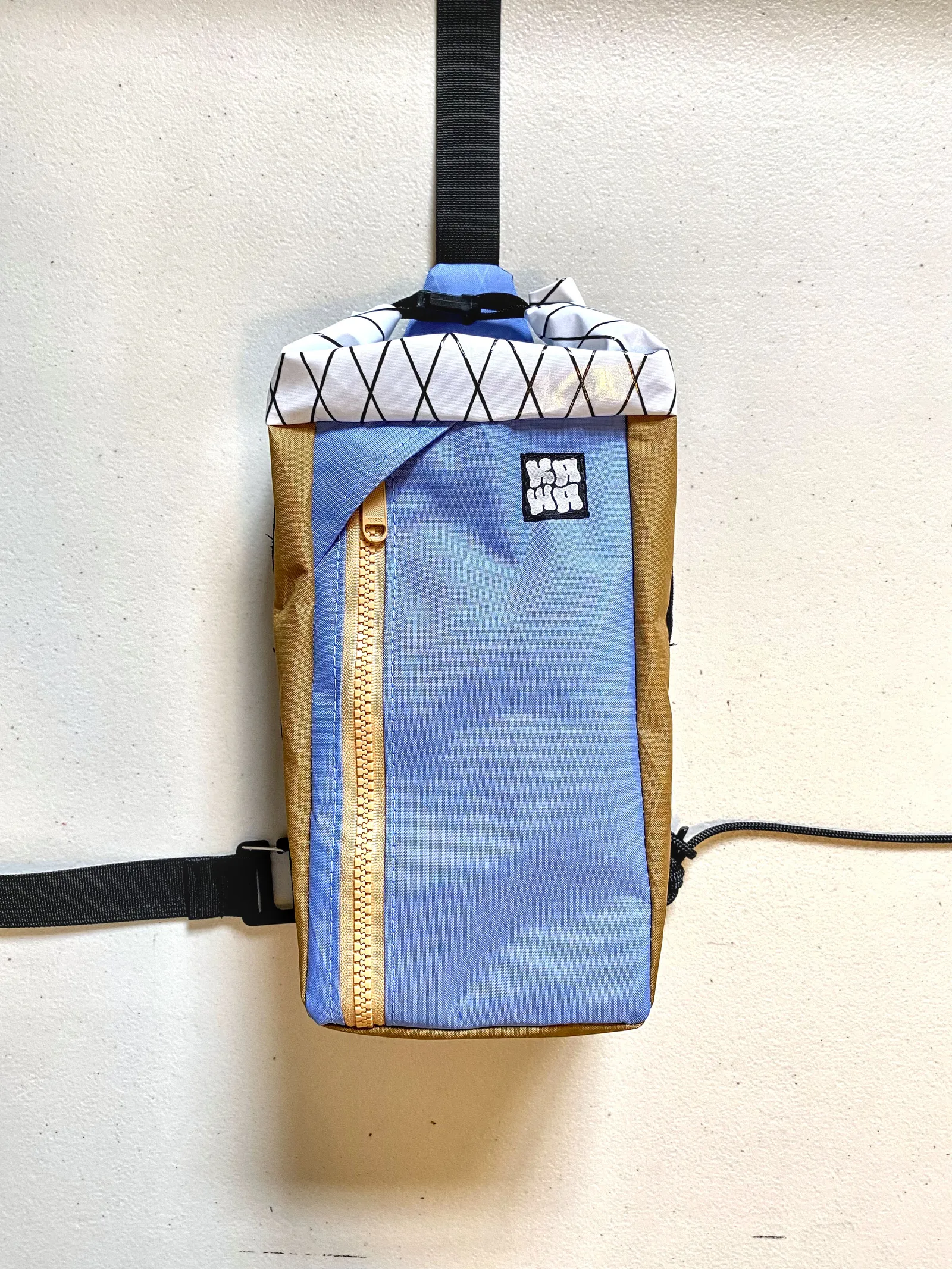
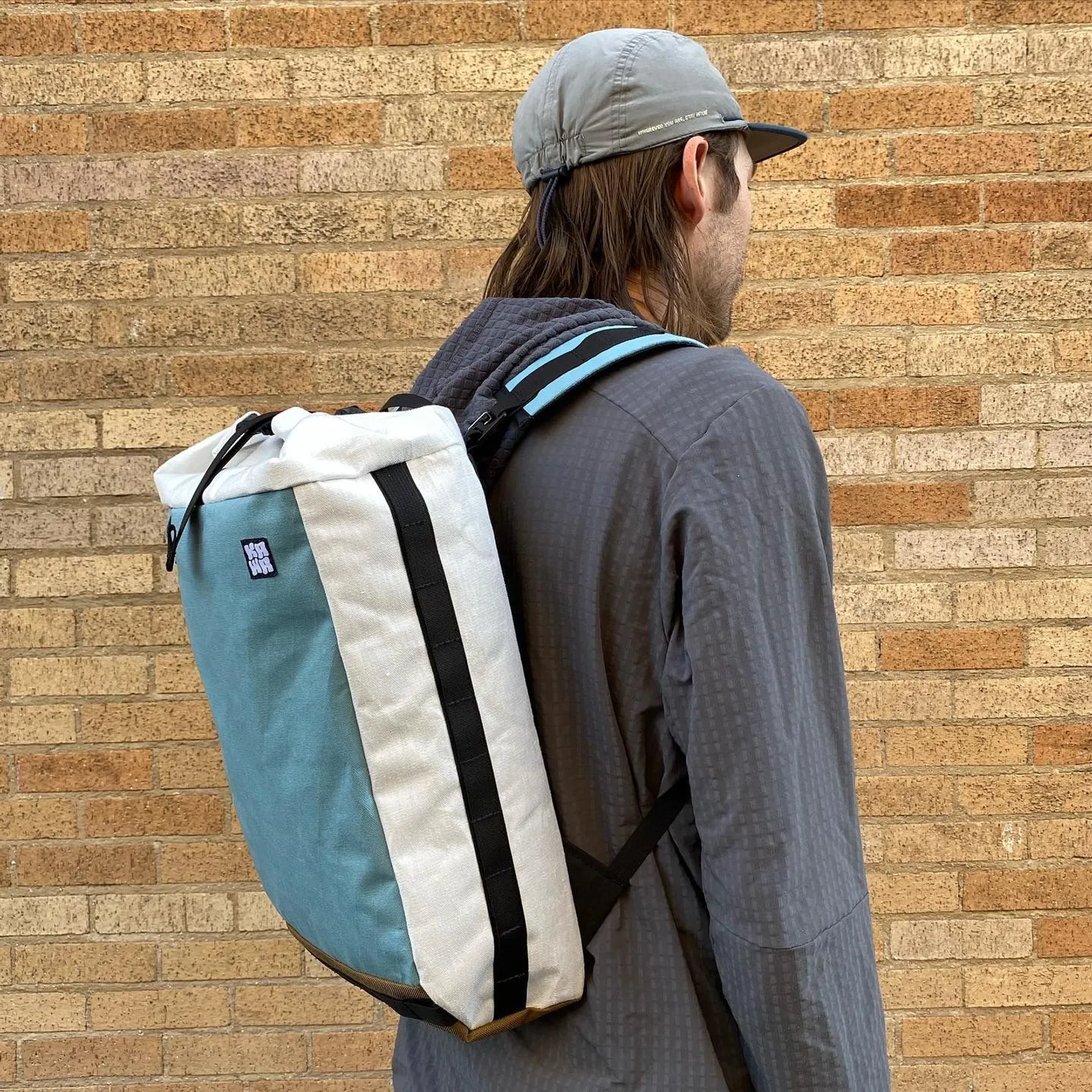
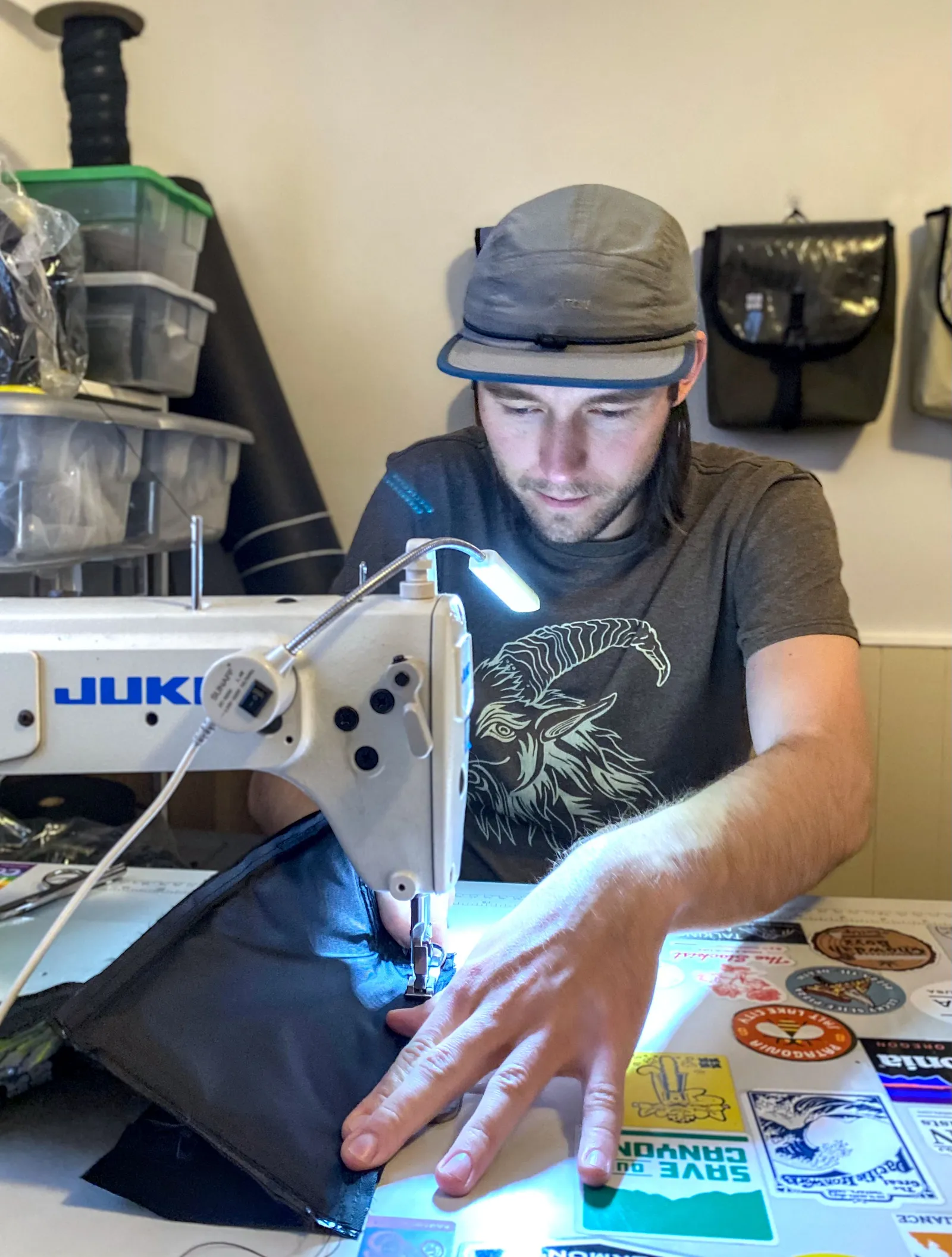
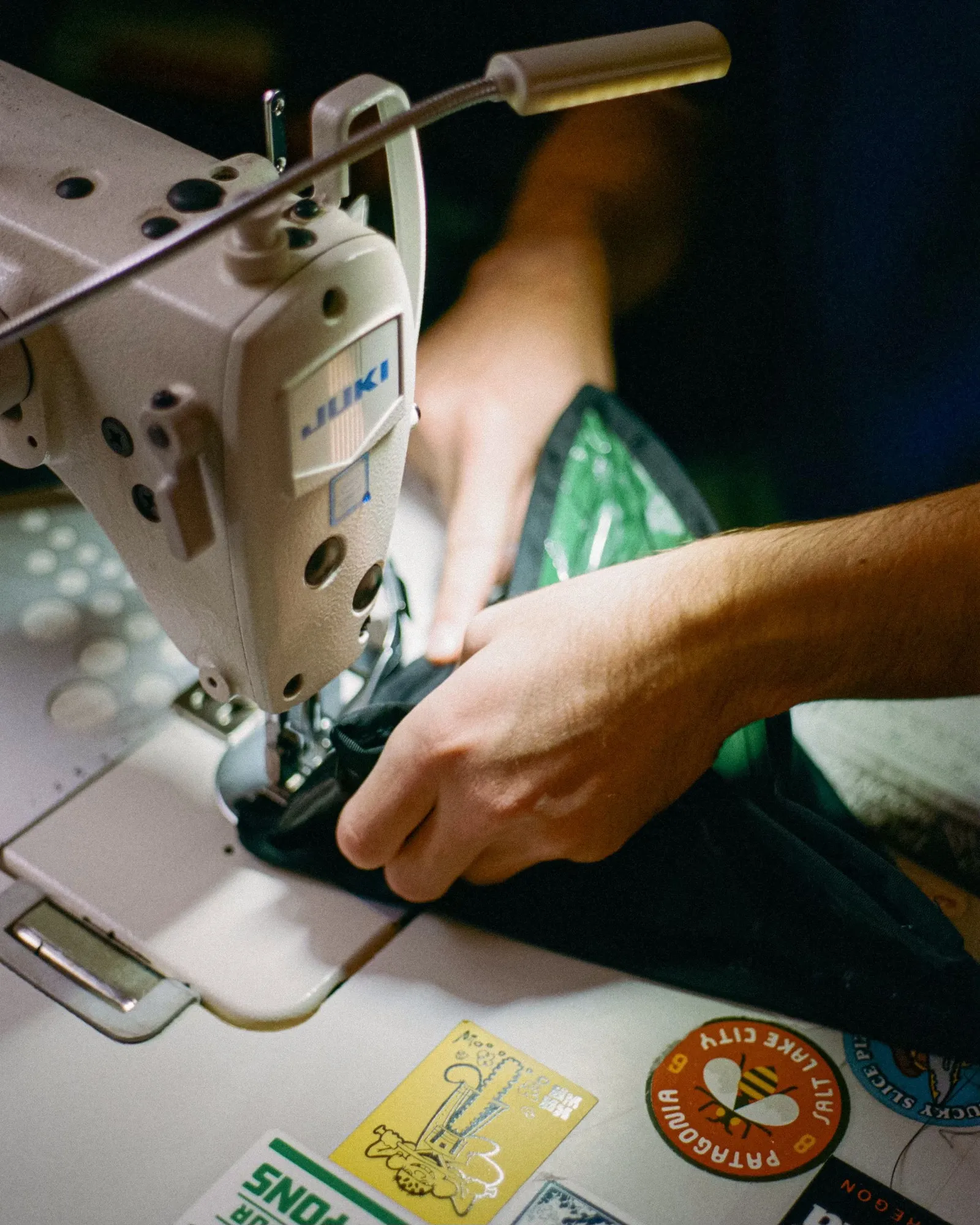
With Kawa my design process is a bit different from a larger company. I am a one person crew doing mockups, pattern design, product and material testing, sewing, cutting, production, and shipping. Because of this I am involved with every step of the design and production process. It both gives me freedom, and constraints.
Scale and Scope
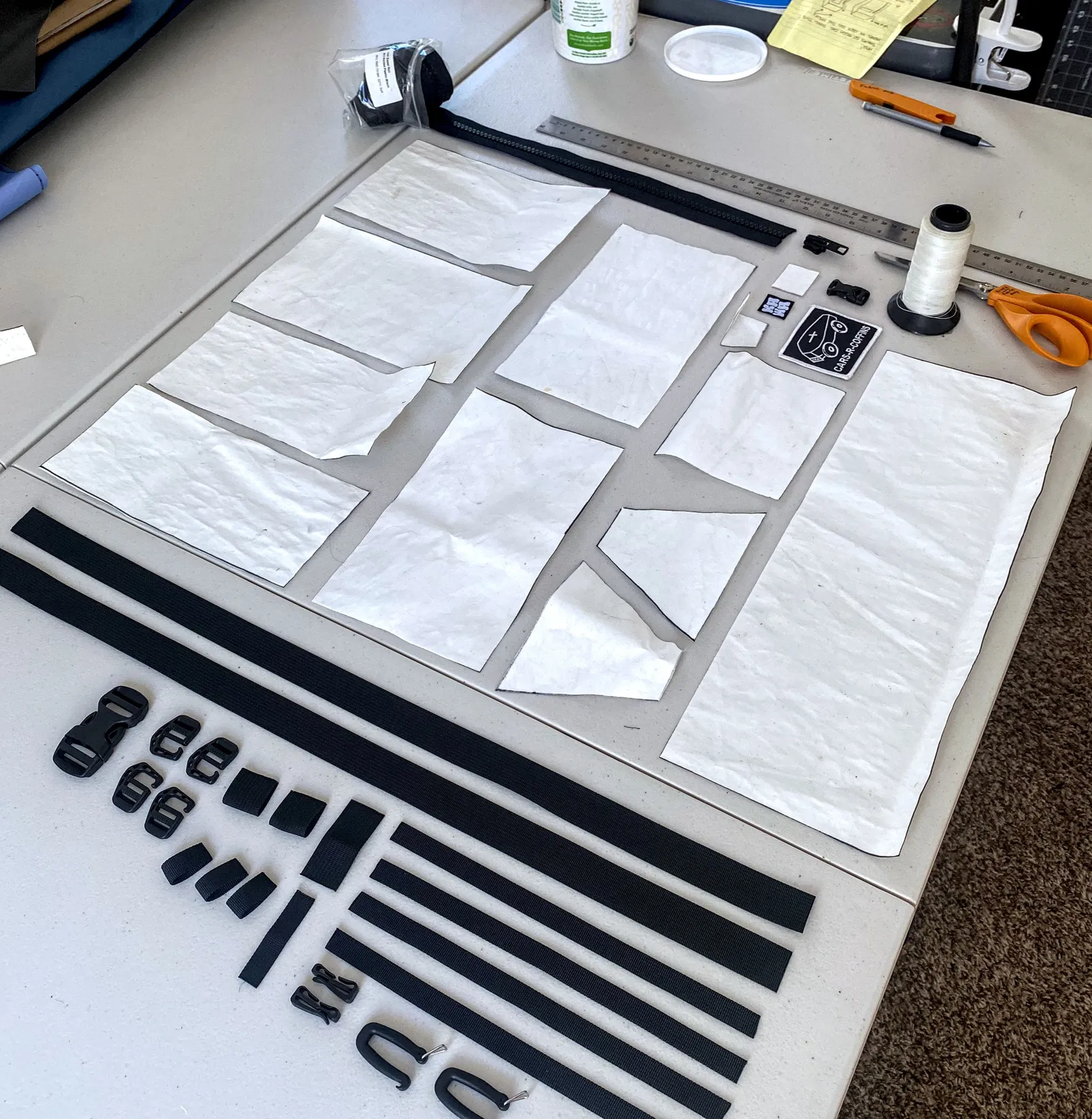
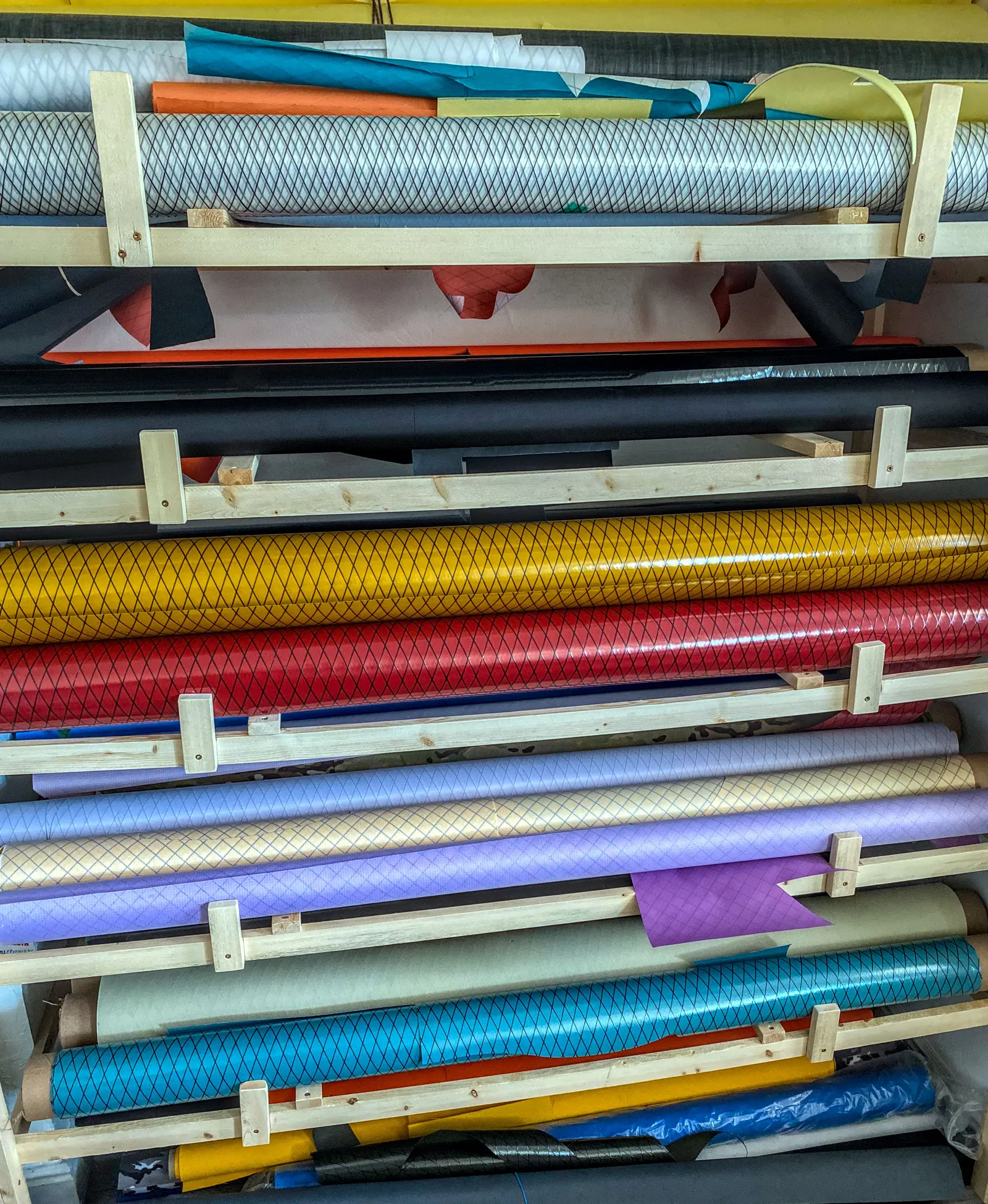
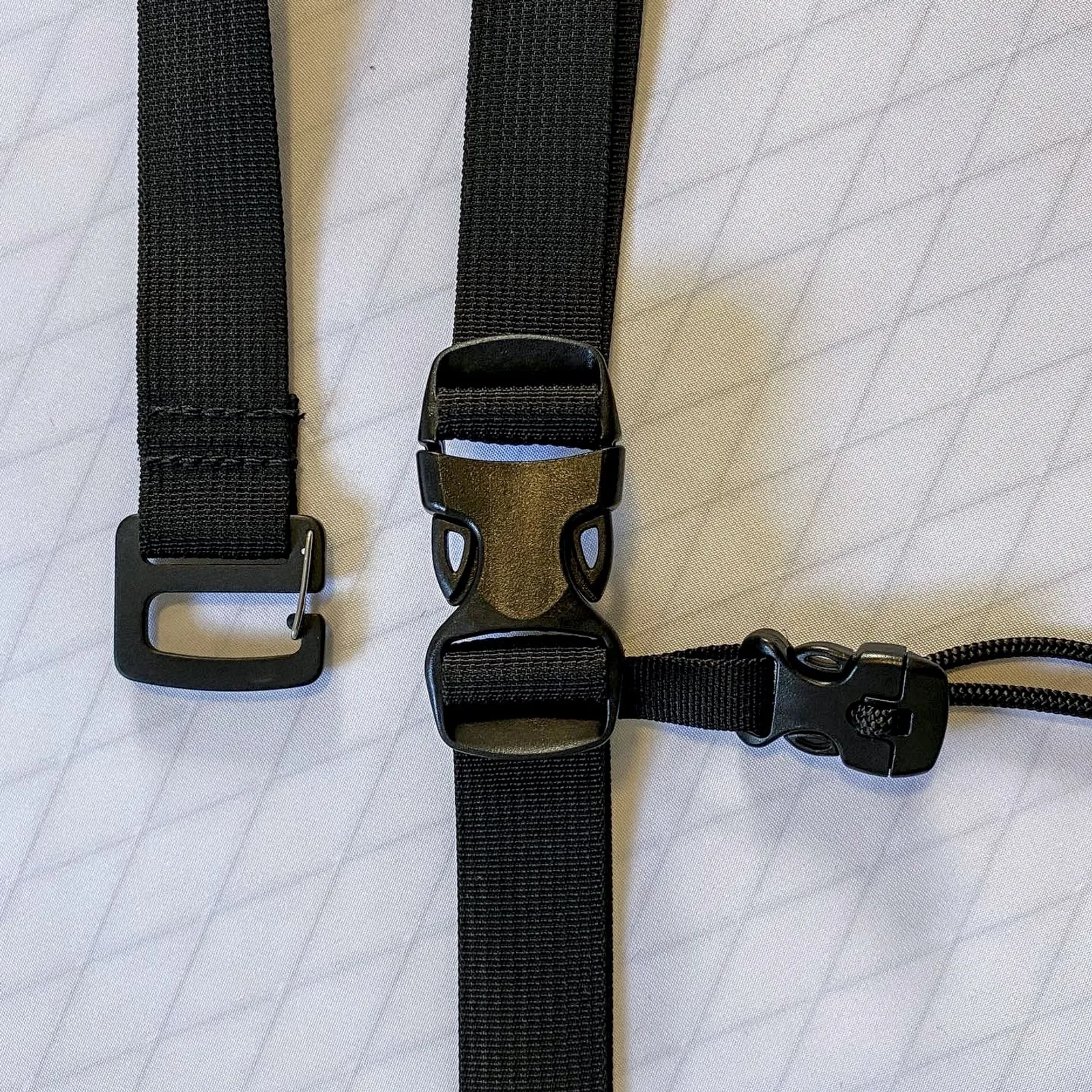
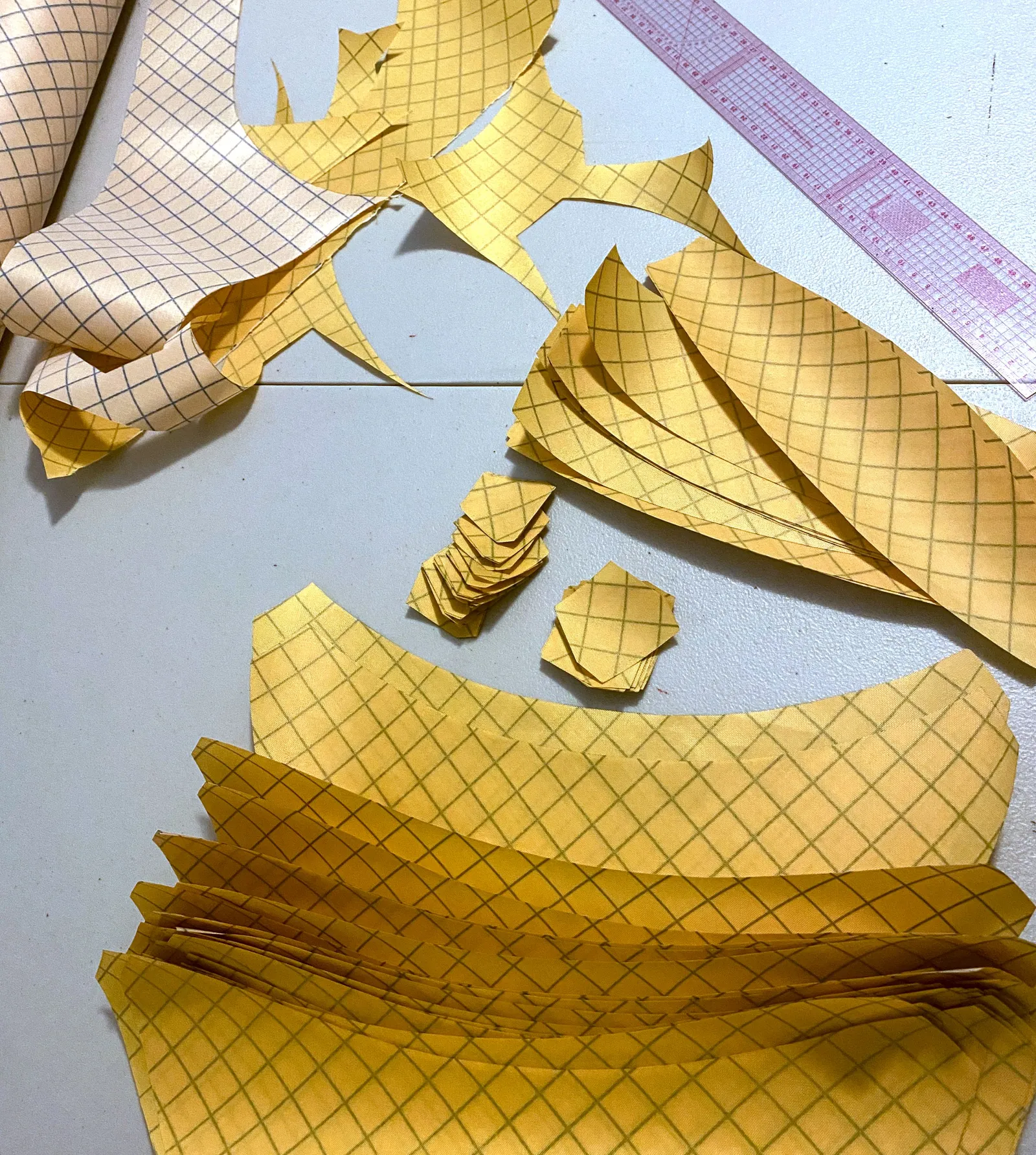
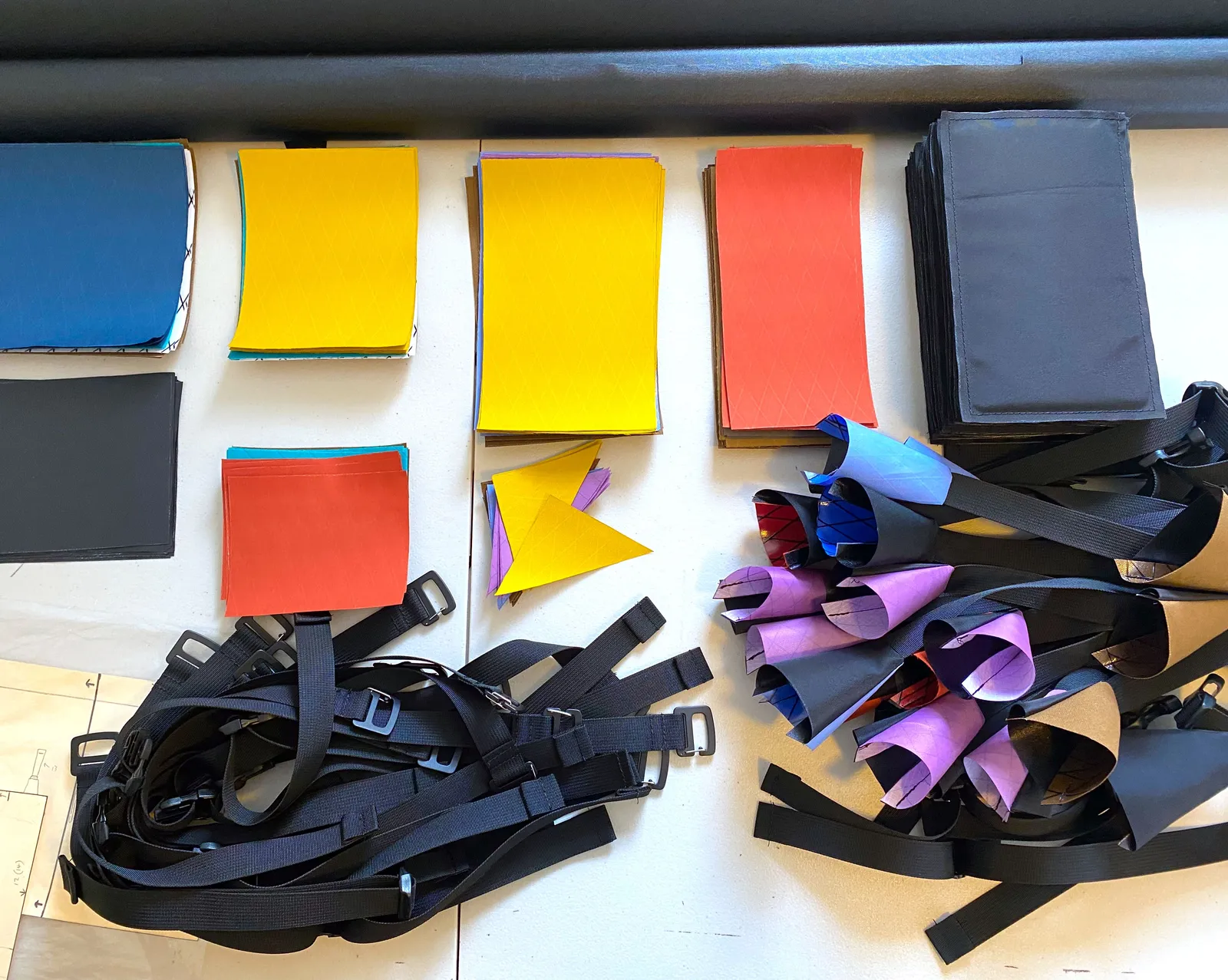
Doing my own testing I am able to directly see faults with designs and quickly fix them. I am also able to easily and quickly change materials and parts out if they are not working well. A limitation of small production quantities is the difficulty of ordering parts and fabric from companies with large minimum orders. Because of this I have had to do a large amount of research on materials and sourcing methods in order to find and order all of the pieces and materials needed. Limited production time frames also mean each bag needs to be designed for efficient production on limited machines. Every time a machine is switched to a different production process is time lost, so each step needs to be ordered for maximum efficiency.
Design Process
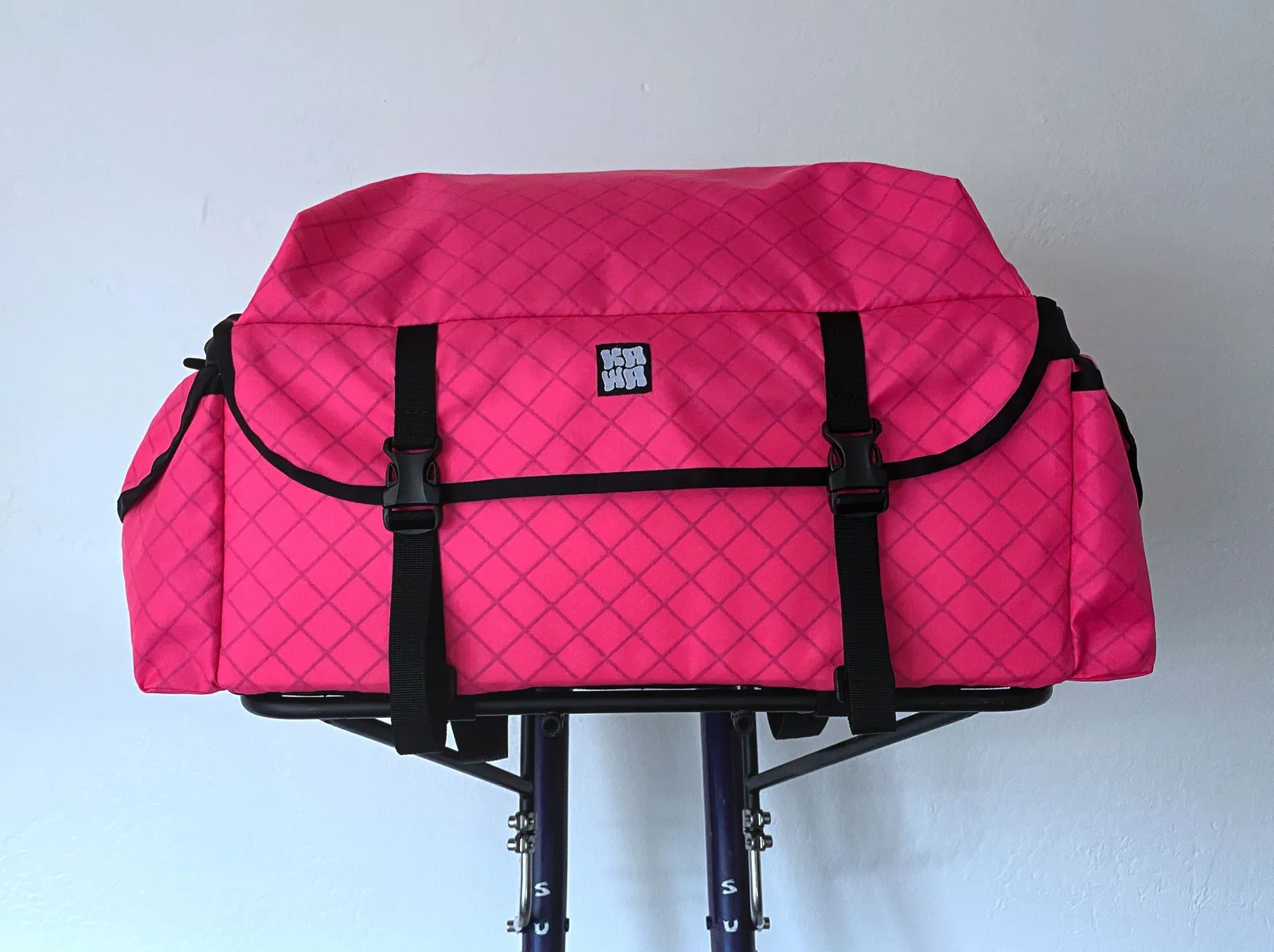
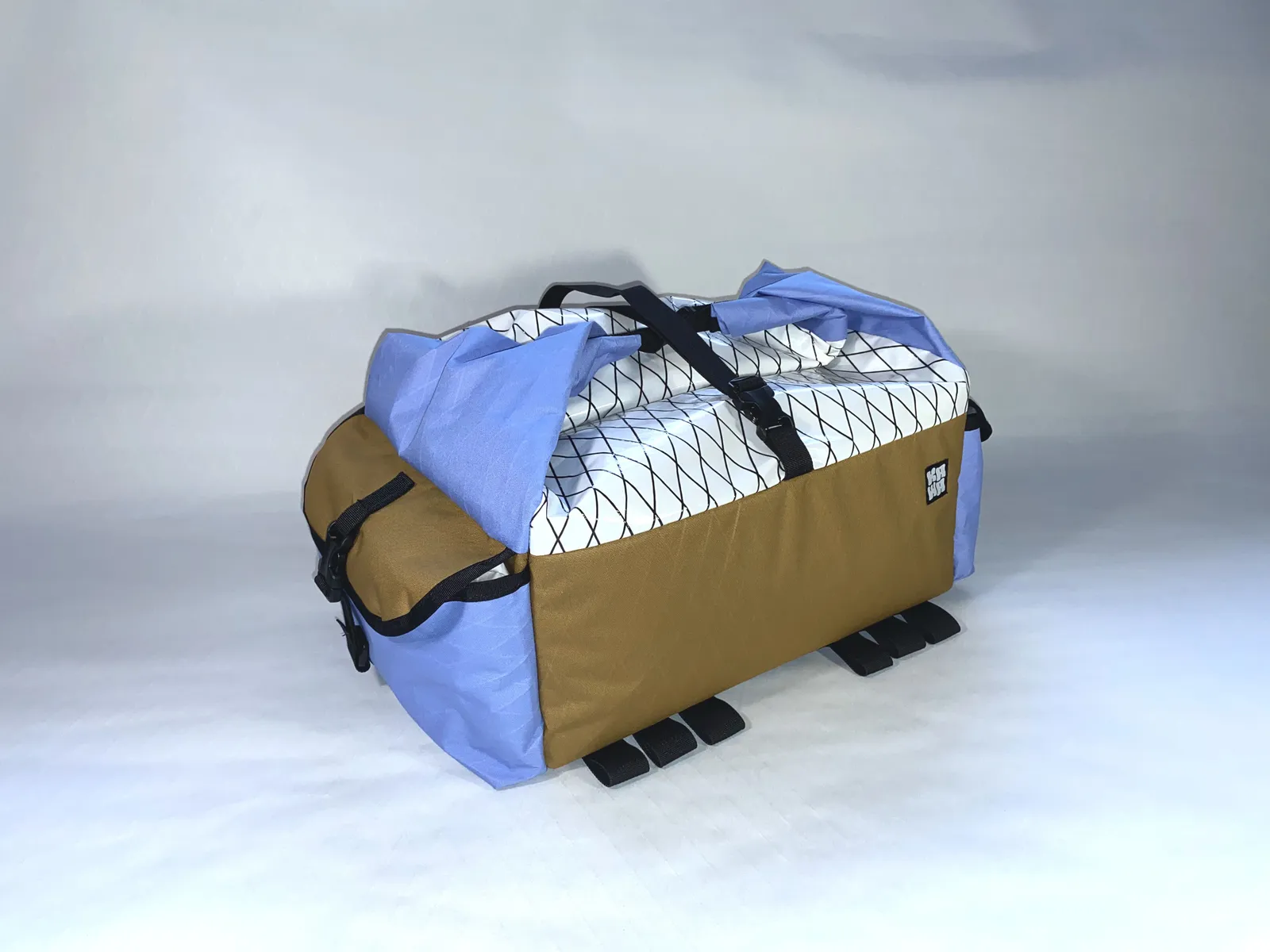
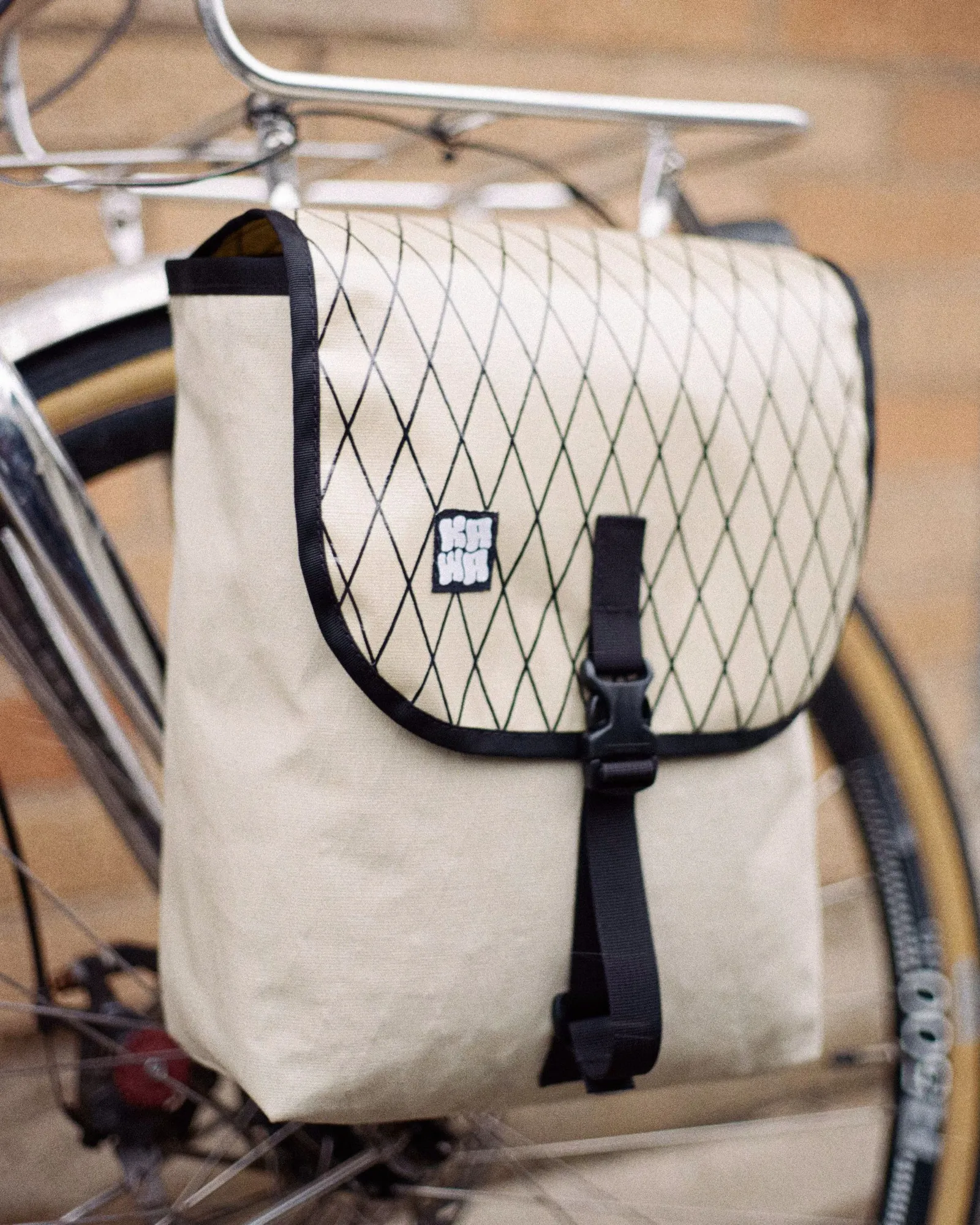
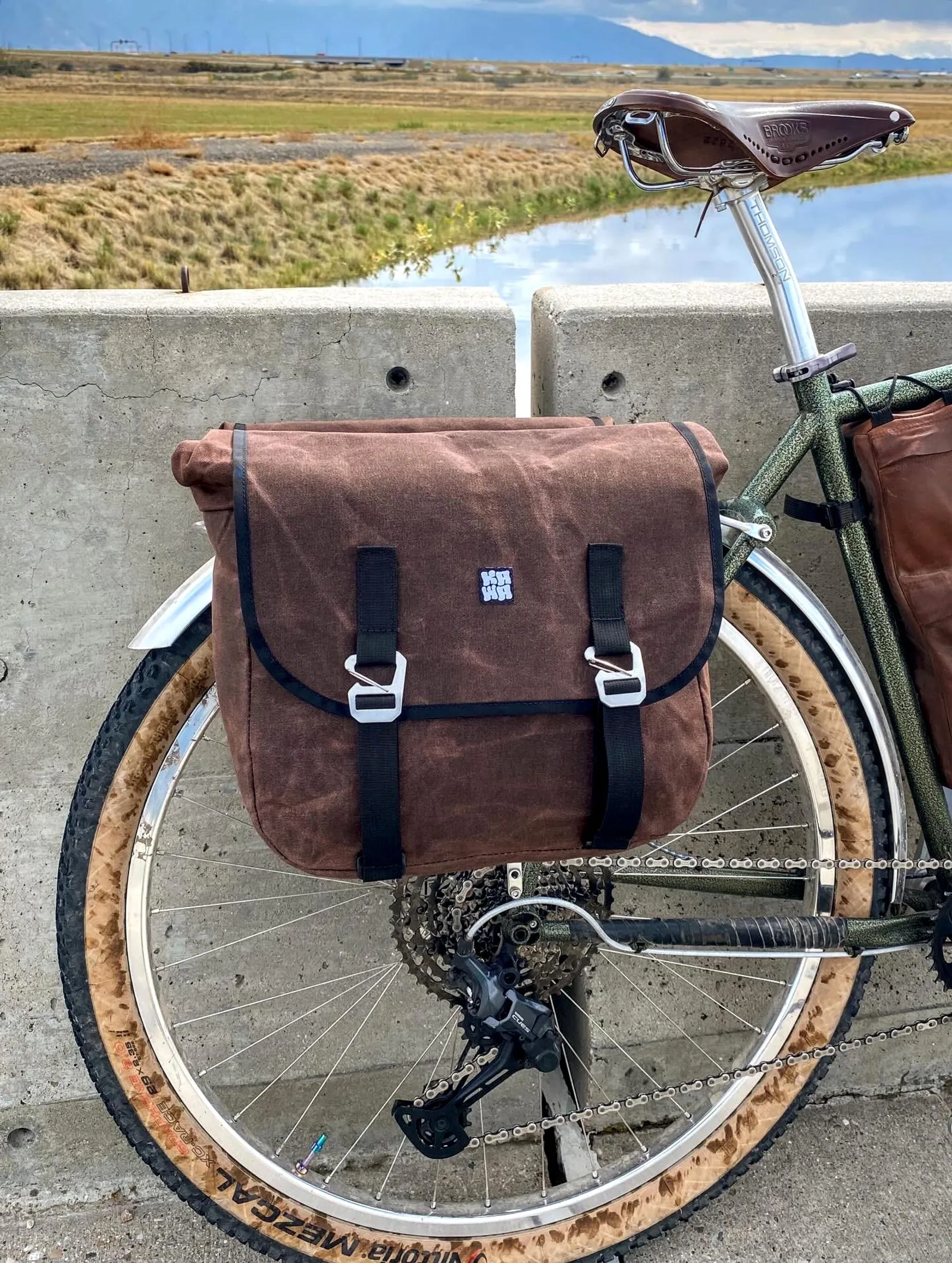
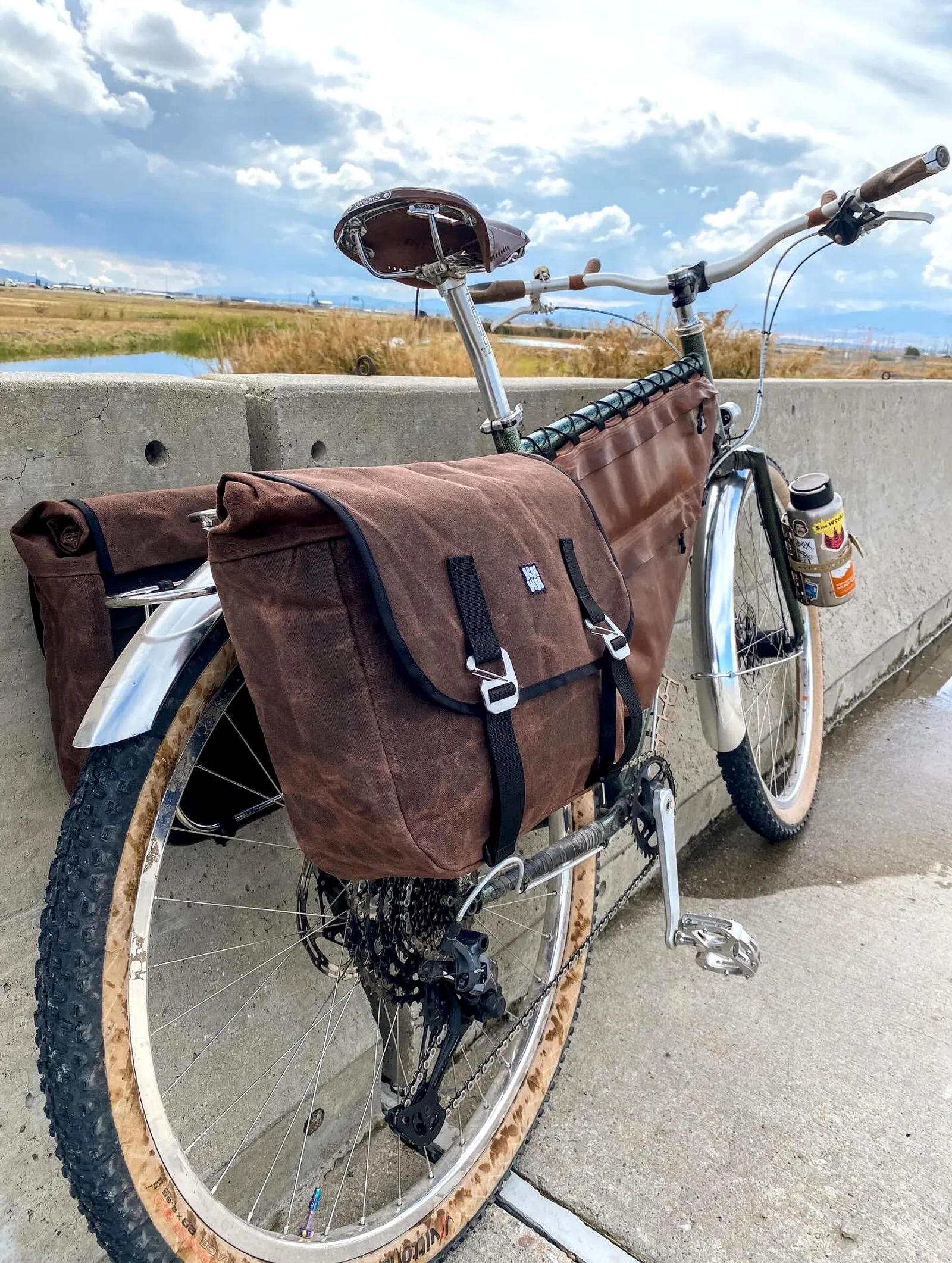
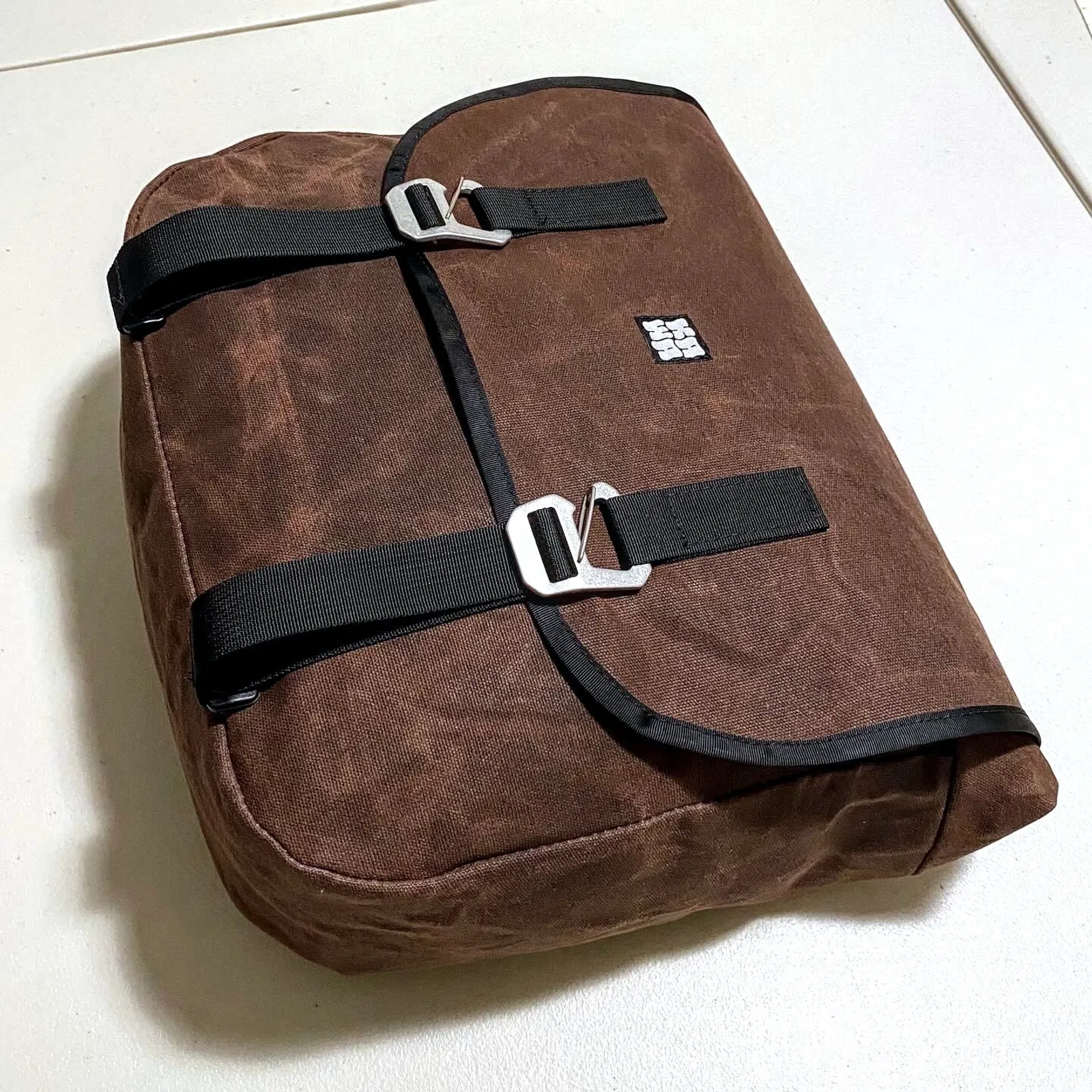
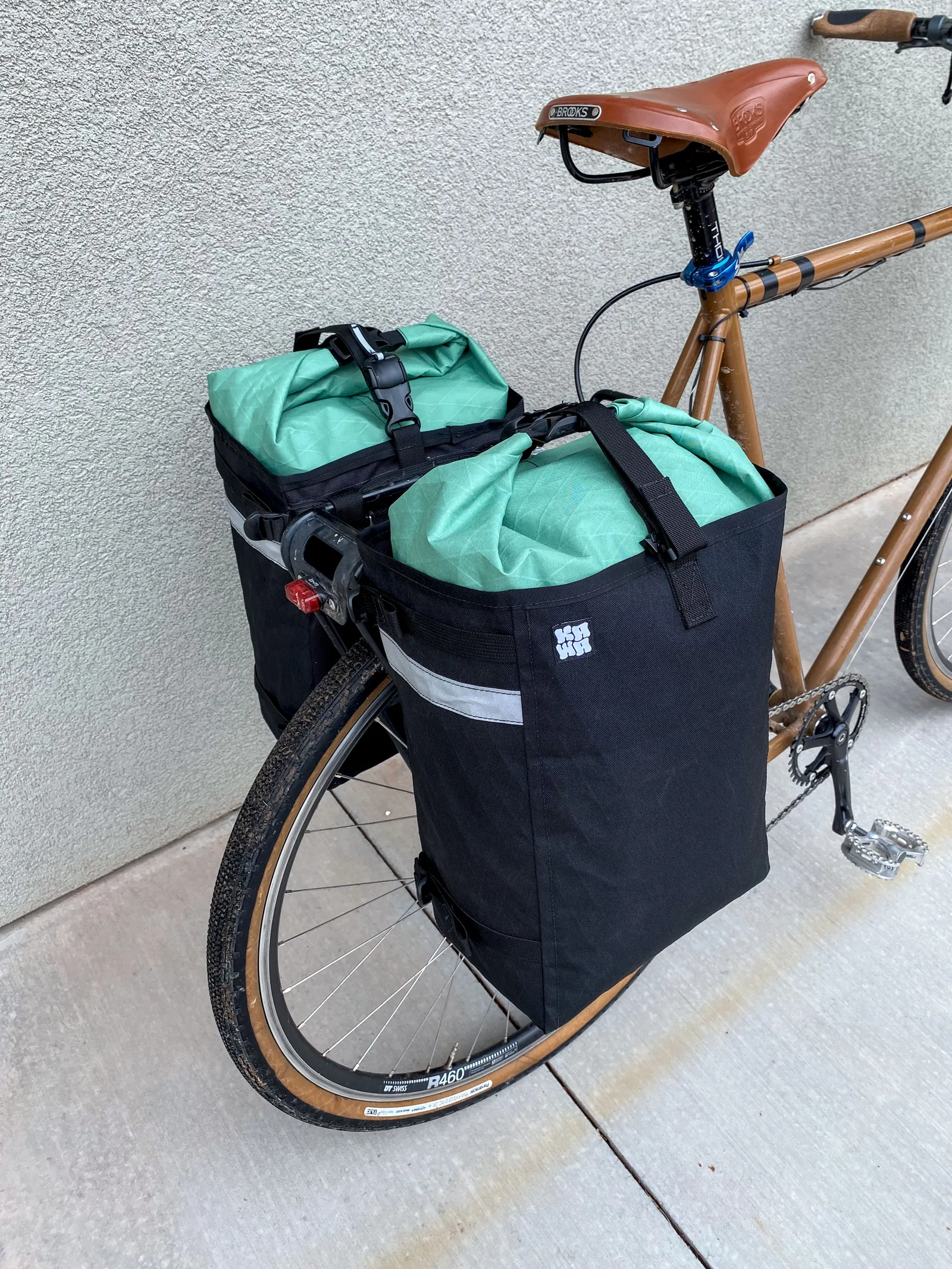
One of my favorite bags I have designed is my panniers. What seemed to be an easy problem turned out to have some difficulties I didn’t anticipate. The panniers I wanted to make needed to be lightweight, very structural and stable for offroad use, low profile, and easy to install and remove. This was a product I personally wanted to make because of my own experiences bikepacking and touring, and I wanted a lightweight option that still had a secure structure.
Prototyping
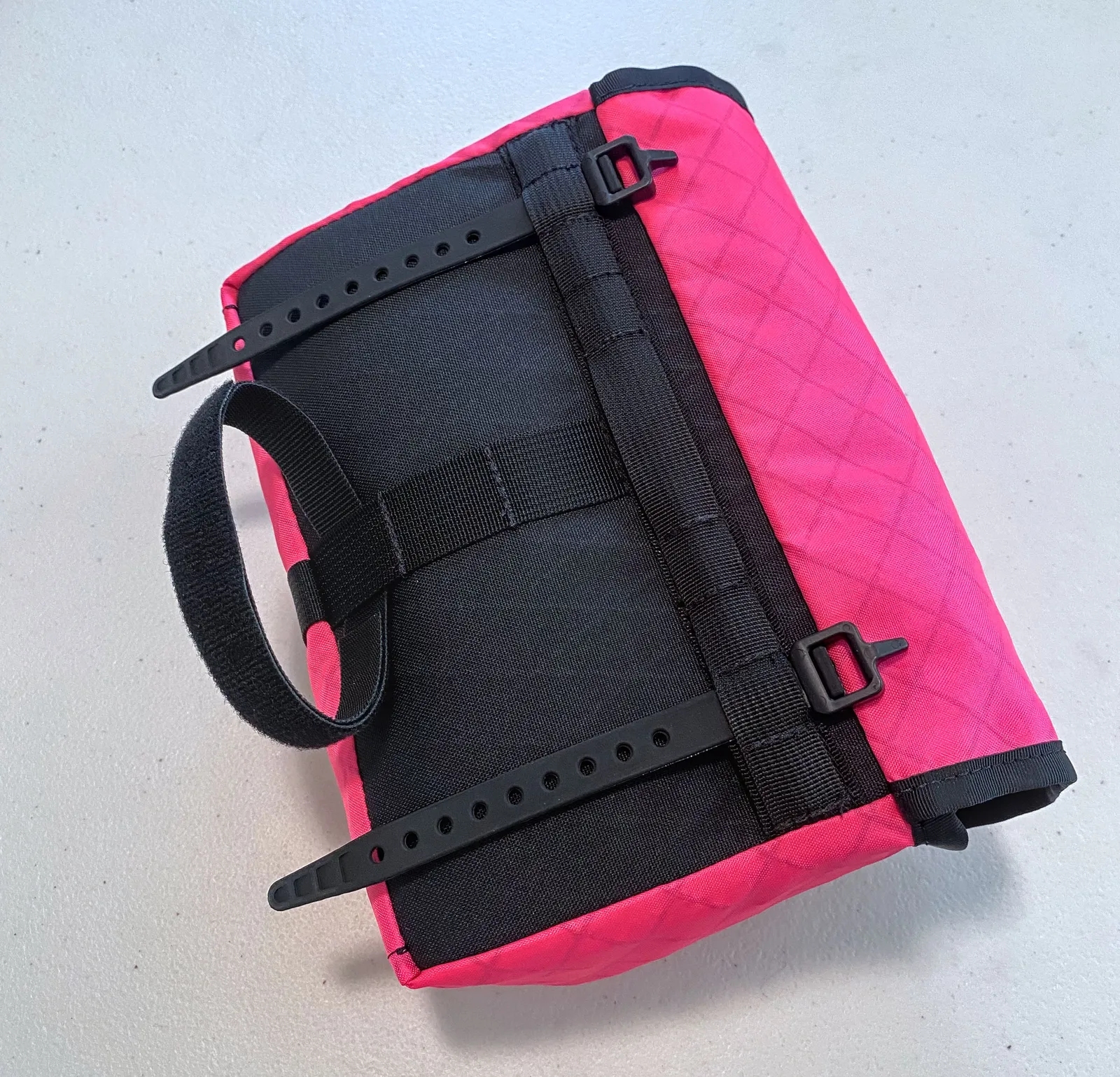
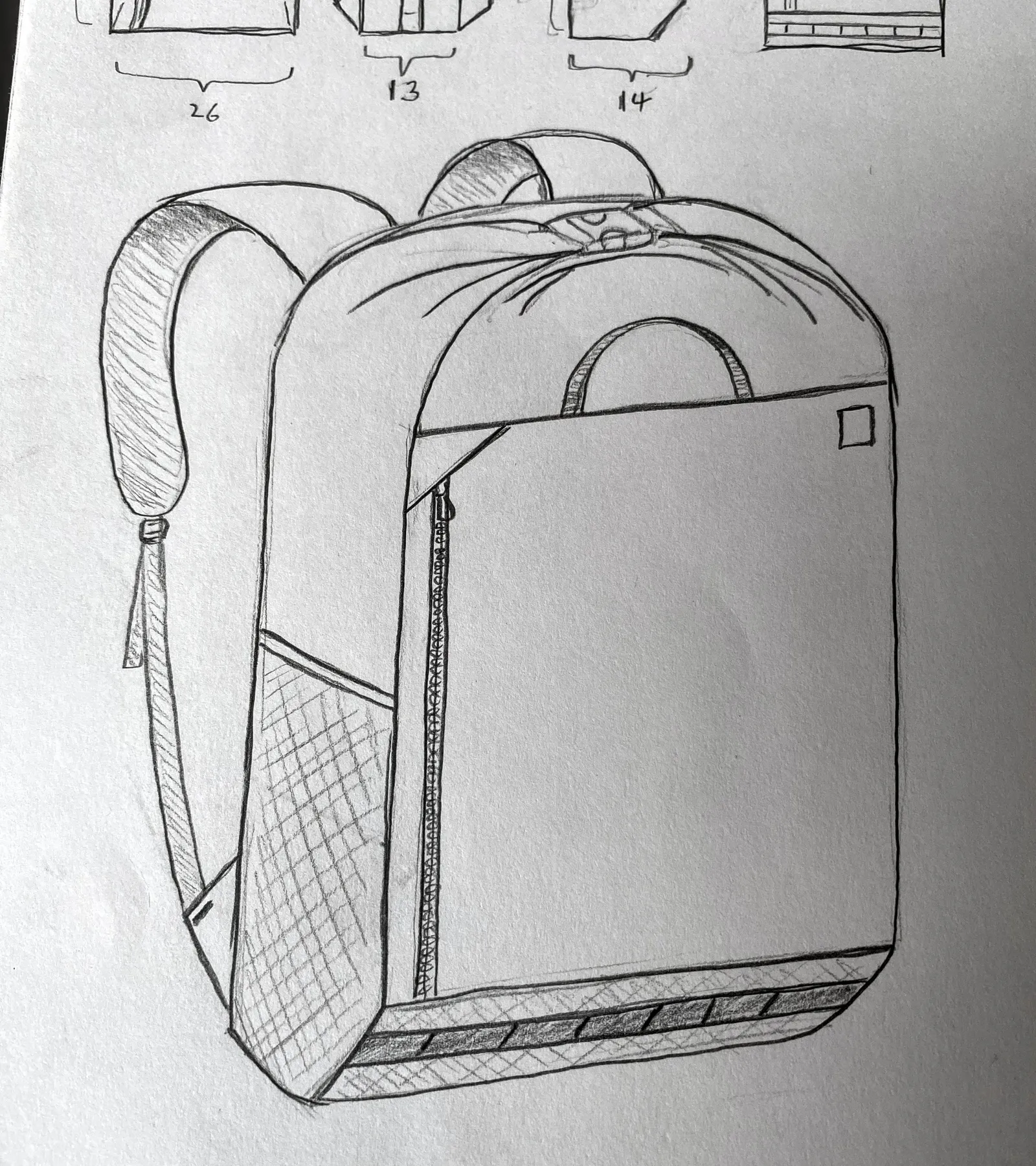
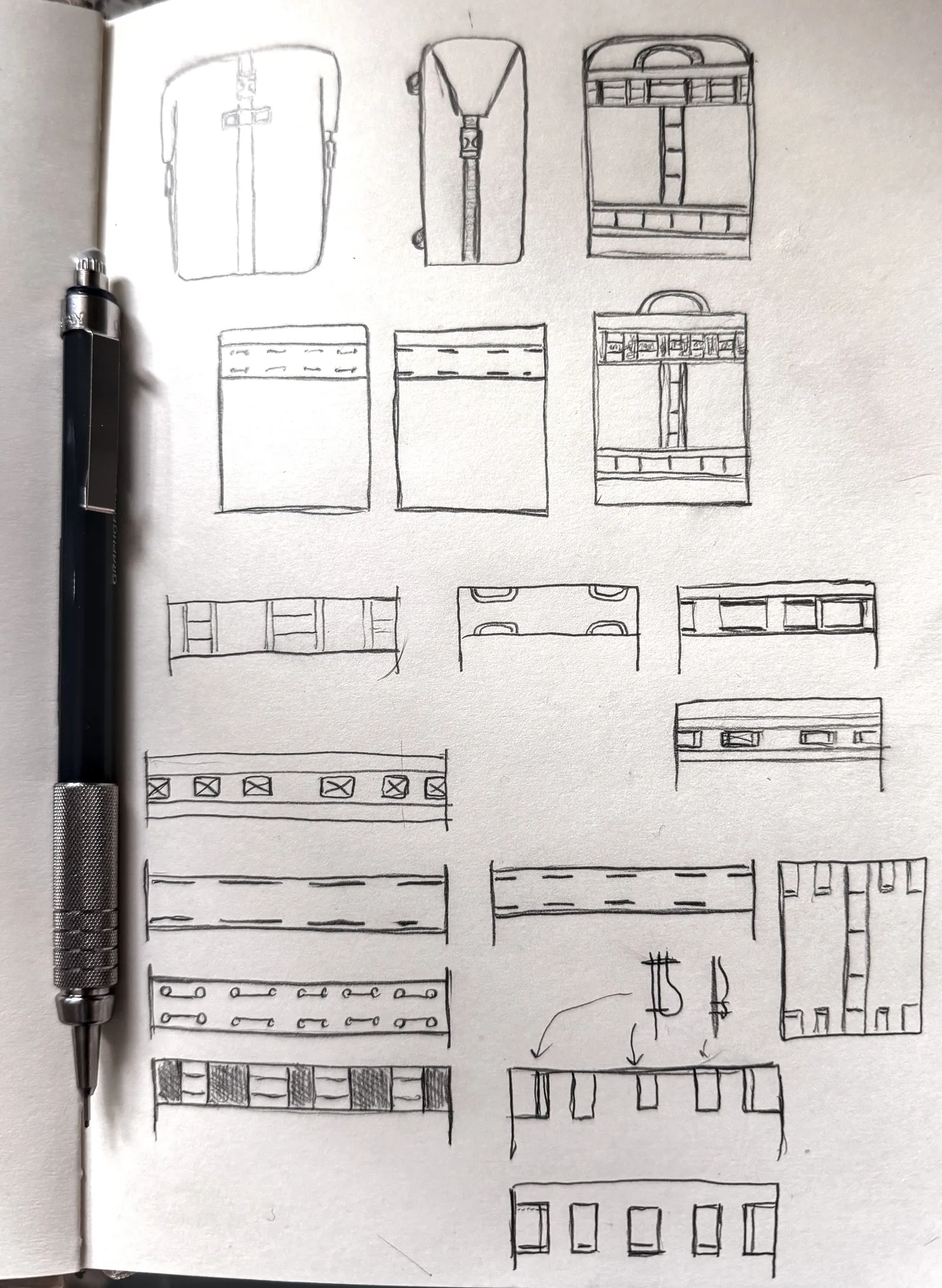
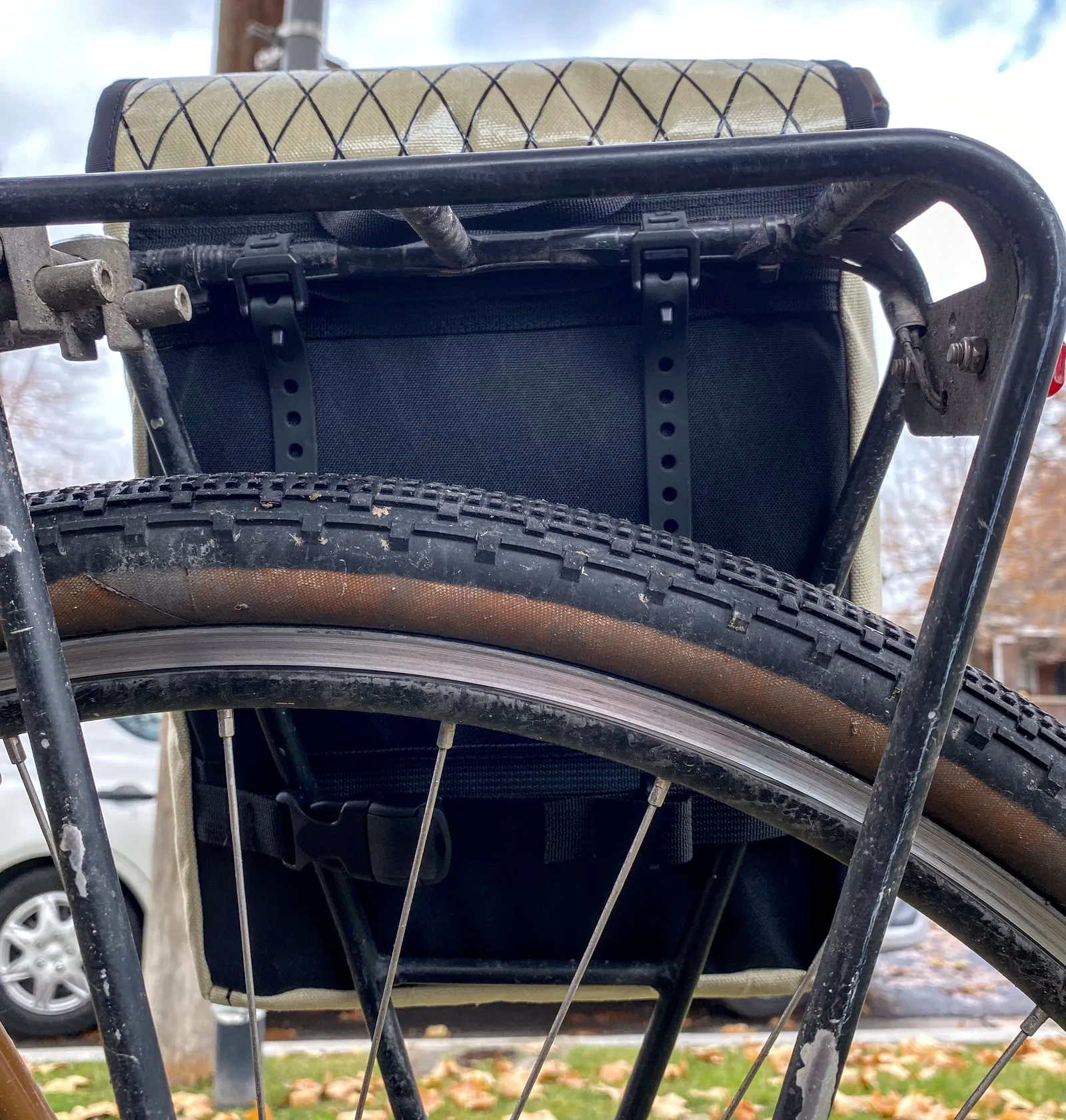
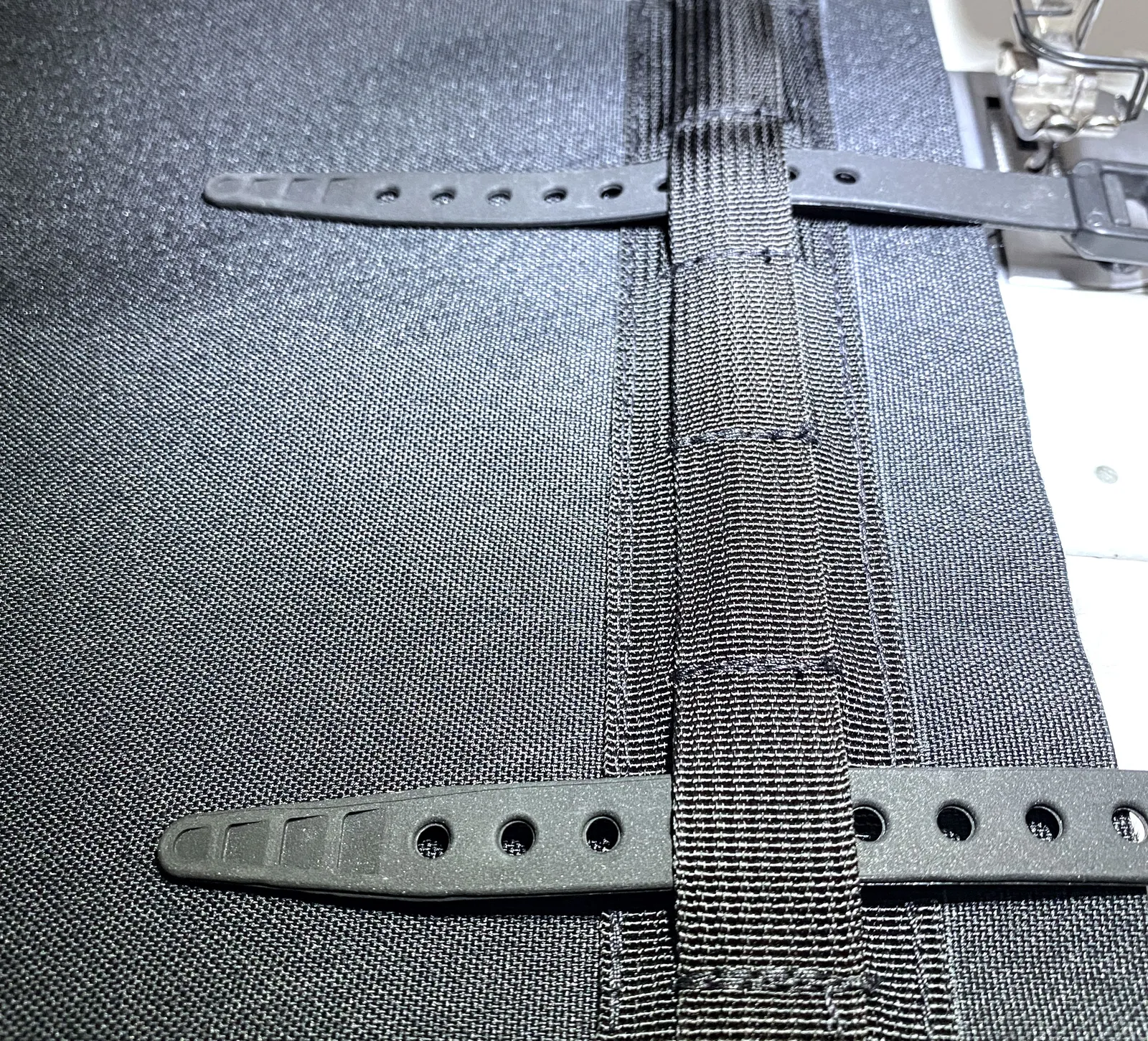
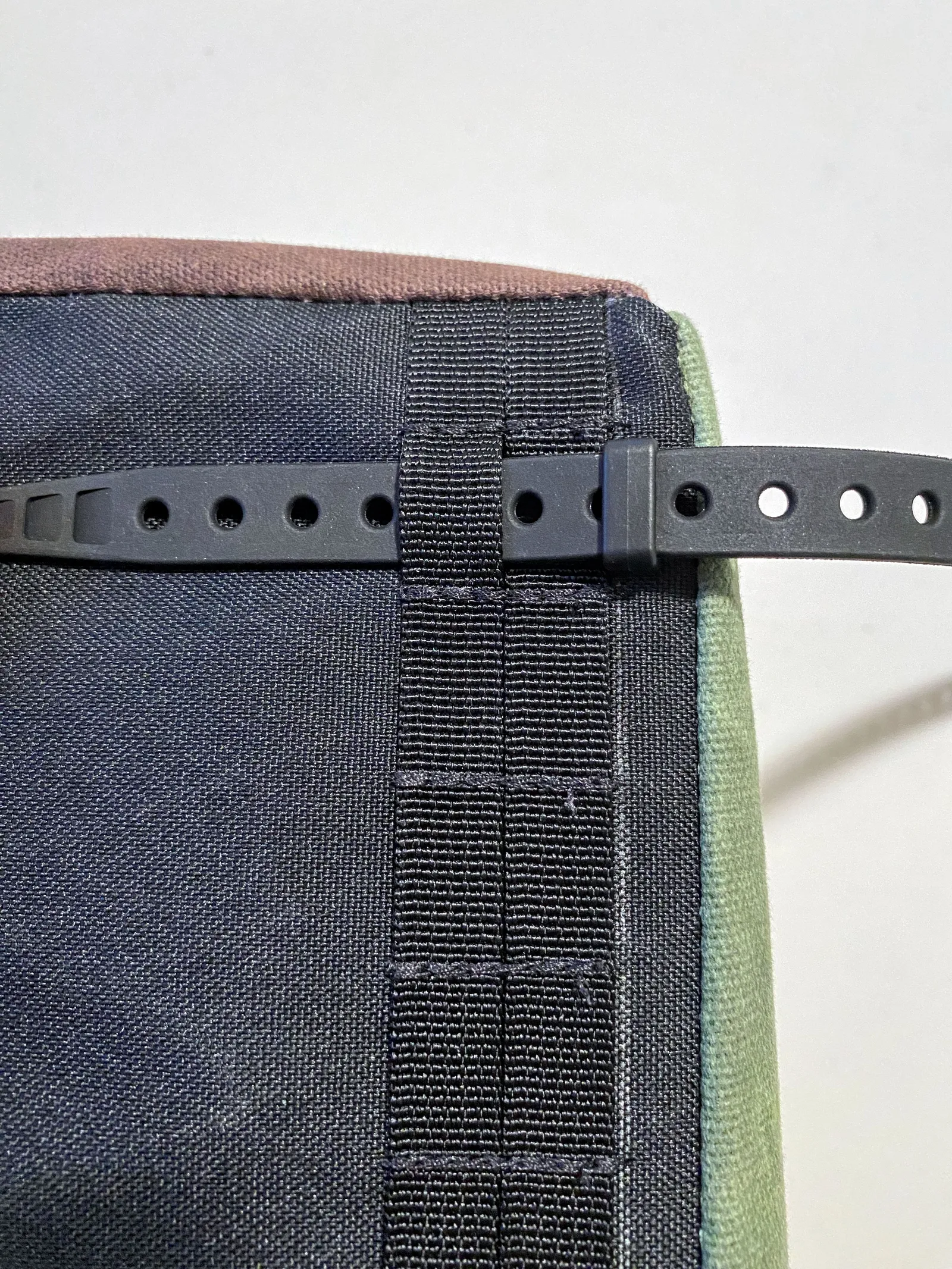
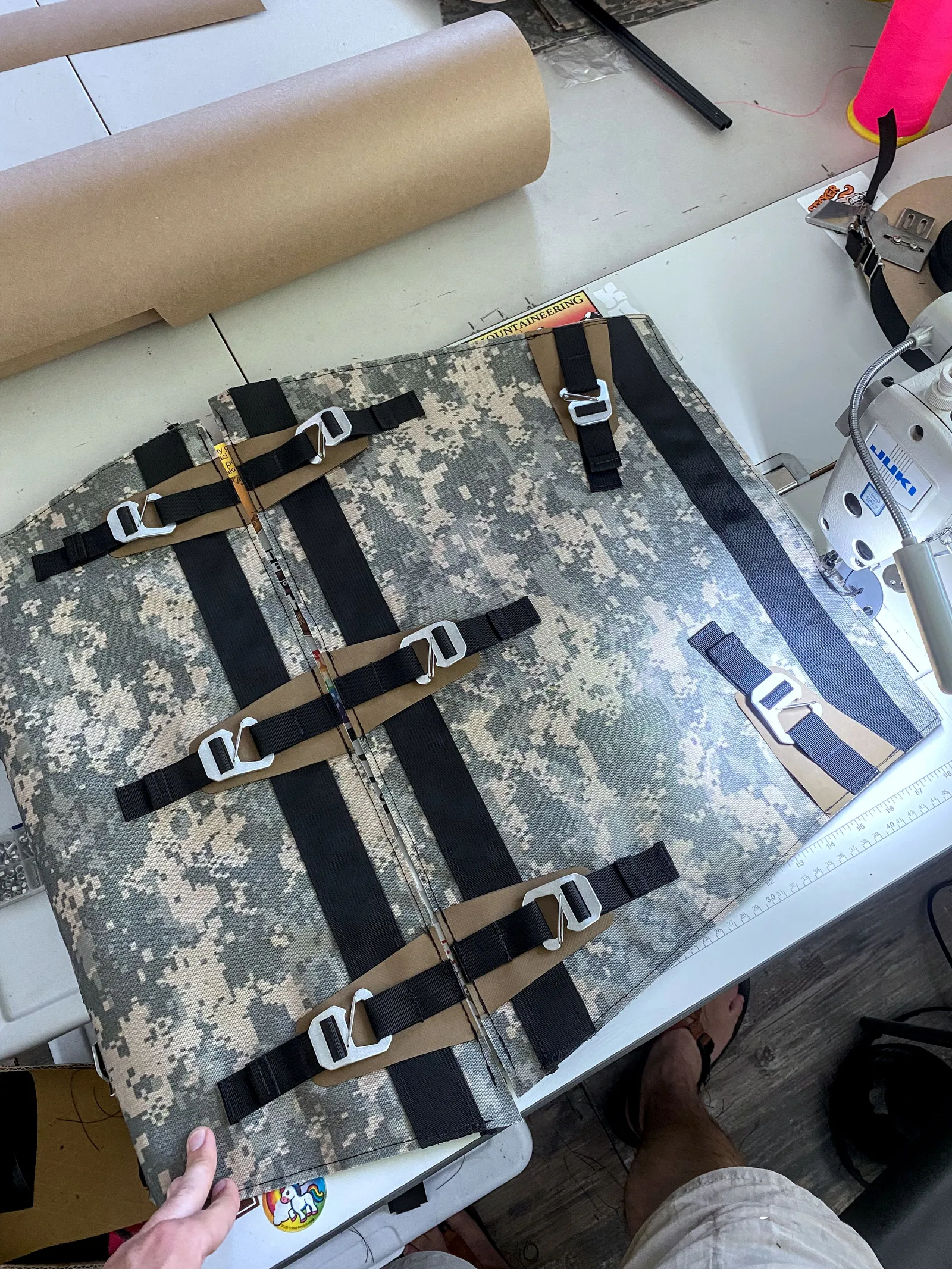
The first step was making many drawings and mockups. Thinking about how loads were transferred through the bag, and what parts and materials would be best for each application. After I had some good ideas and had done some preliminary testing I started making prototypes. These were used in real world conditions and were tested until they failed each time. One version with plastic locking buckles was secure, light, and easy to install, but at higher load weights the buckles would snap. Another version using metal stiffeners with metal locking hooks was extremely durable and secure, but when tested with other people it became clear that it was difficult to install and remove. After several rounds of testing I found that using small elastic straps ticked all of the boxes that I wanted for the bag. Using aluminum tubing and the straps together let the bag cinch tightly to the bike rack, and the stretch of the strap accounted for vibrations shaking things loose. Taking various design choices learned from each previous bag I made my current iteration which I am still making today.
Material Testing
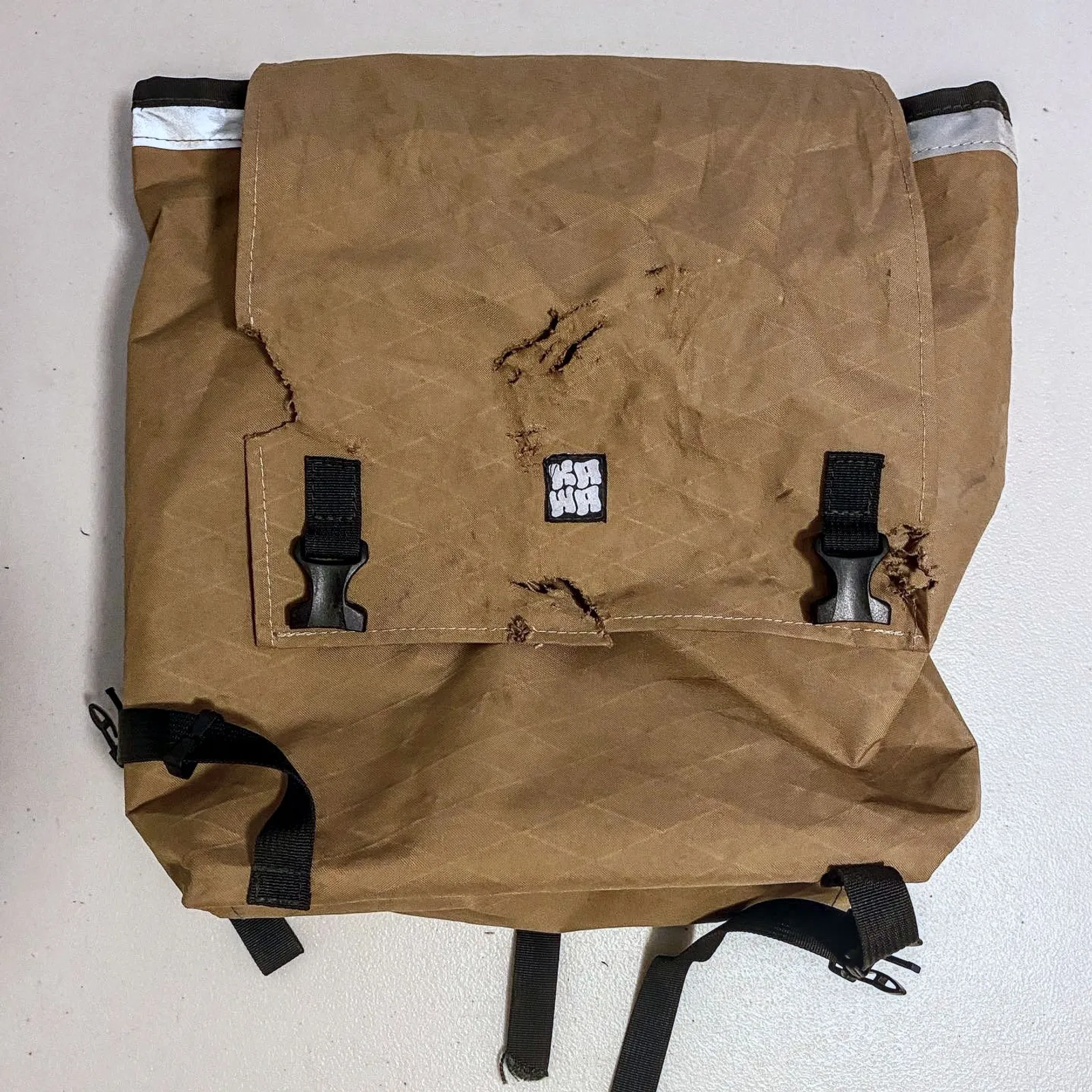
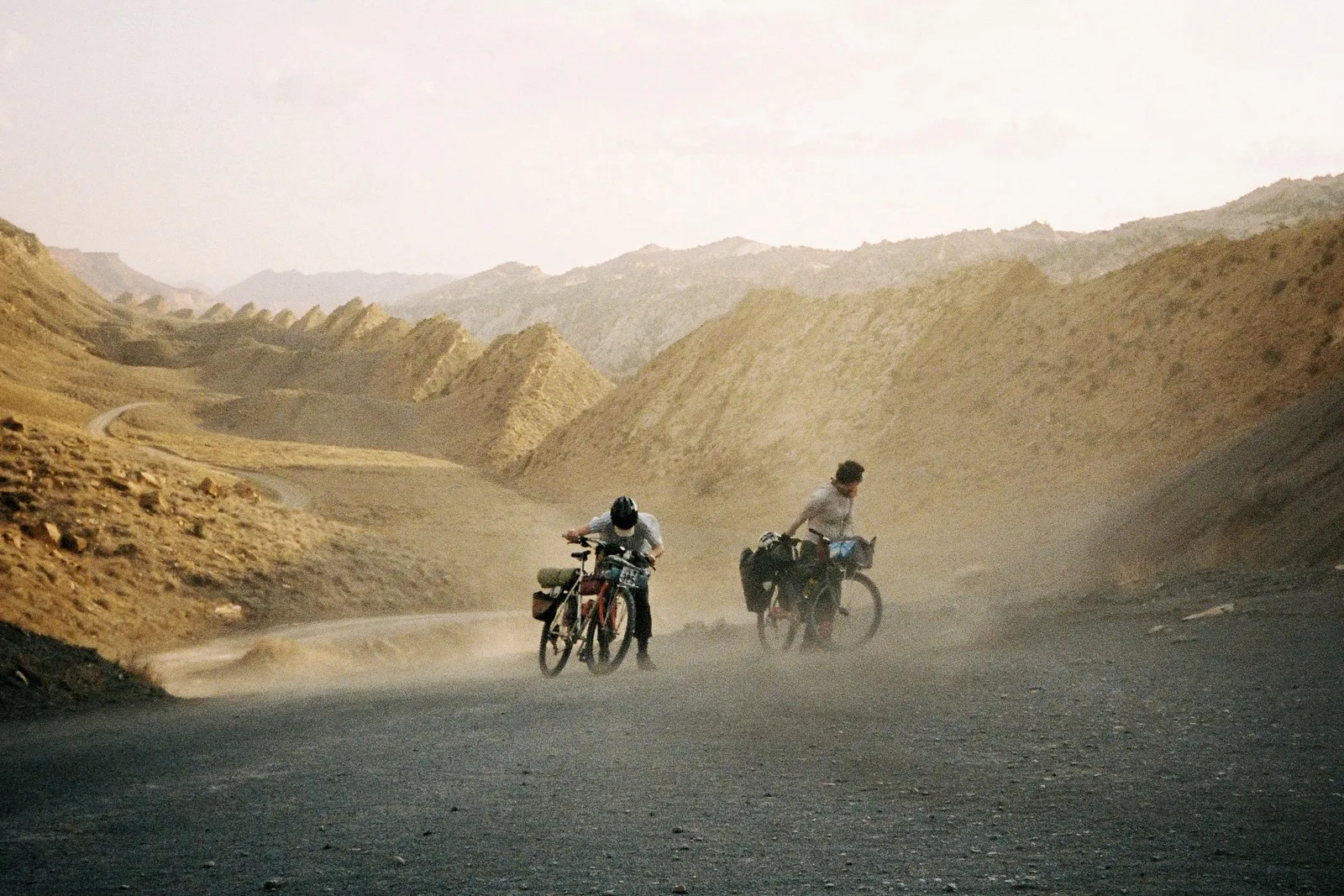
With my material selections I have had a couple decades of firsthand product testing experience with doing outdoor sports that has helped me choose what materials and parts I like to use. I use the products I design extensively and know what materials last well in real world conditions because of this. An example is when I did my three month bike tour in Japan. I had two sets of panniers on that trip with different brands of the same fabric. After a few months of heavy use in varying temperatures, wet weather, and lots of abrasion, it was clear that one brand had a weaker coating that had started to flake off, while the other brand of fabric had no signs of damage. On paper both of these fabrics seemed to be almost exactly the same, with the less durable fabric actually having more impressive lab results. Seeing how fabrics and materials react to real world conditions is essential to my design process, as many times lab results are difficult to transfer to real applications.
Natural Materials
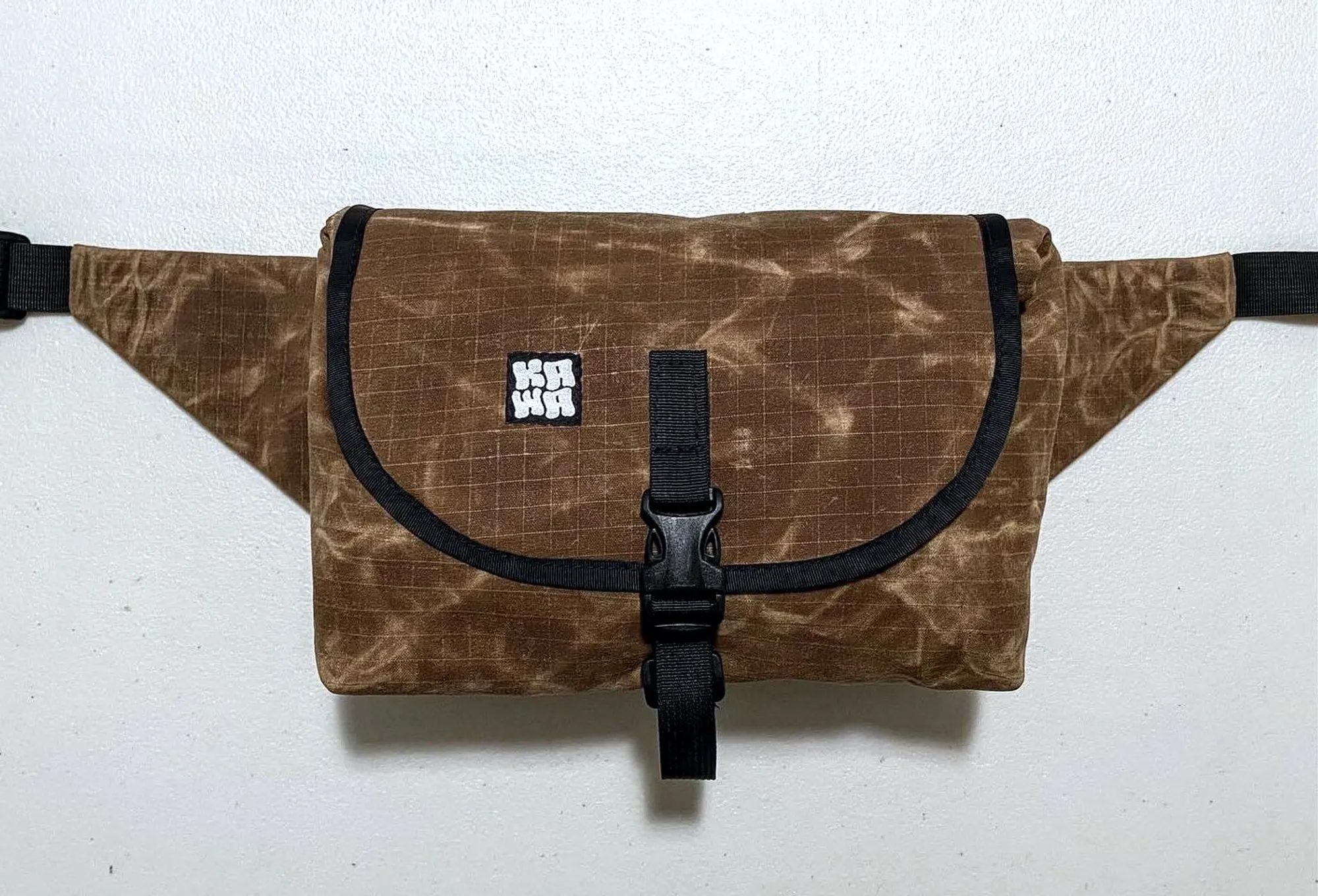
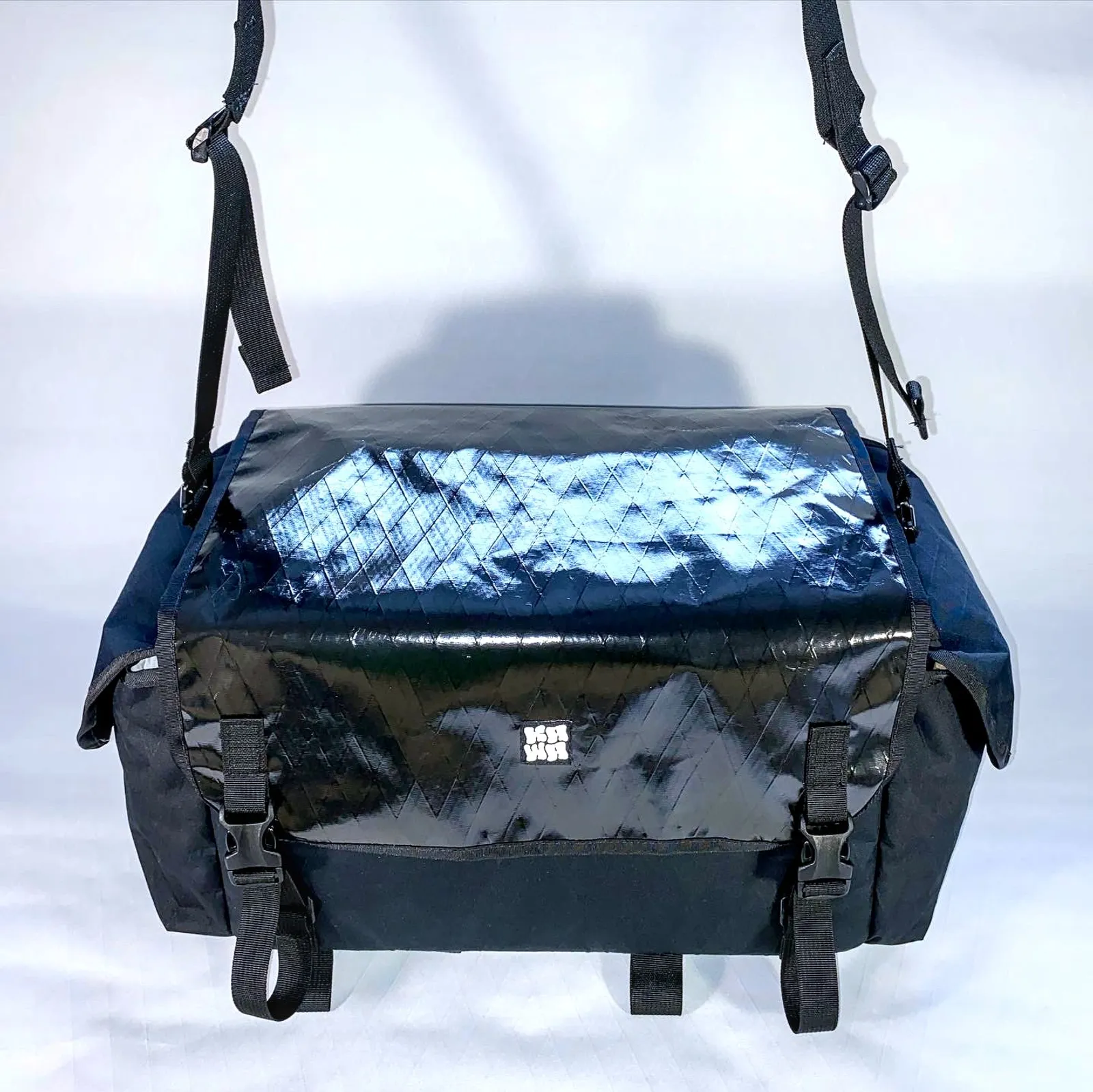
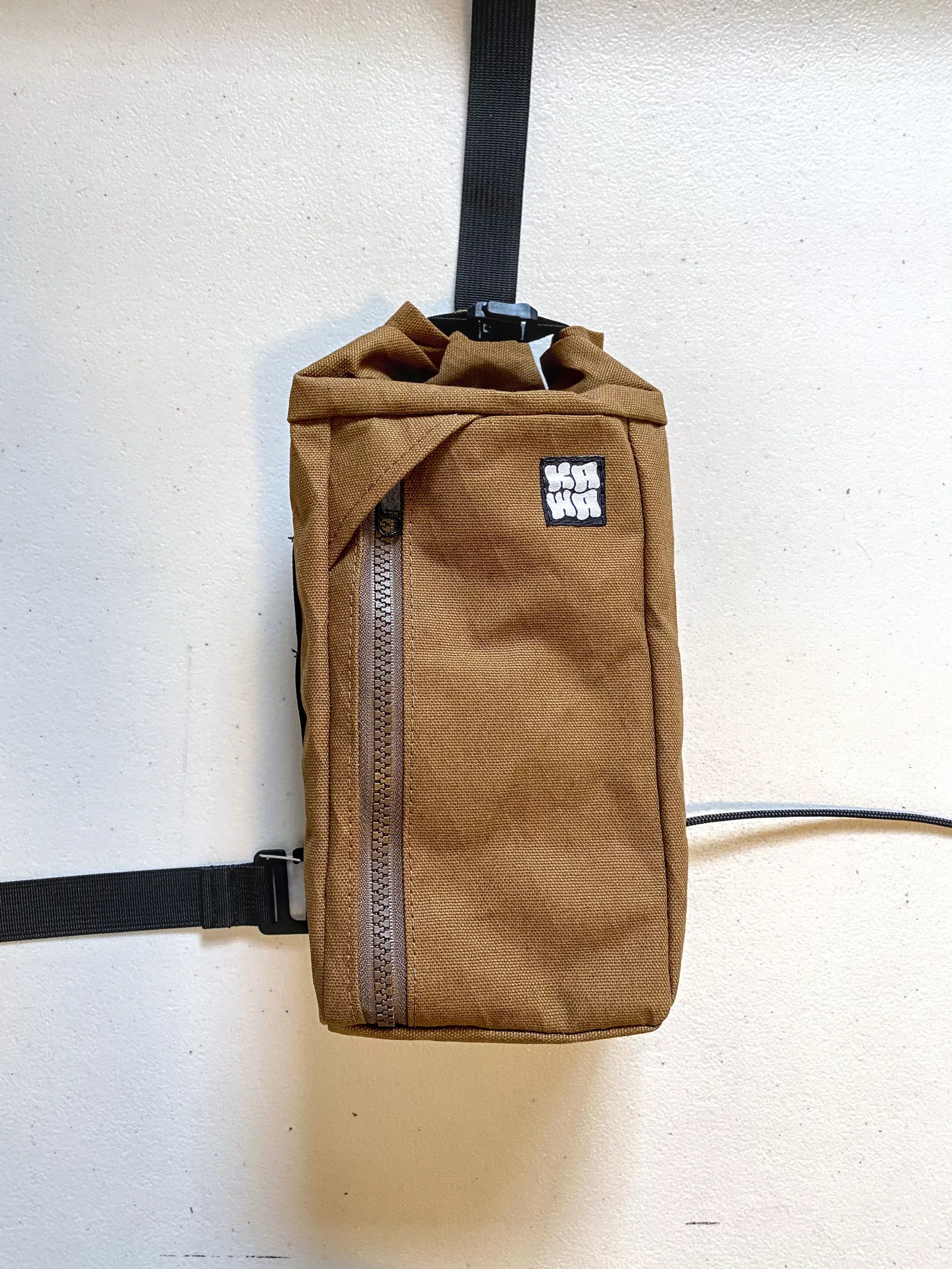
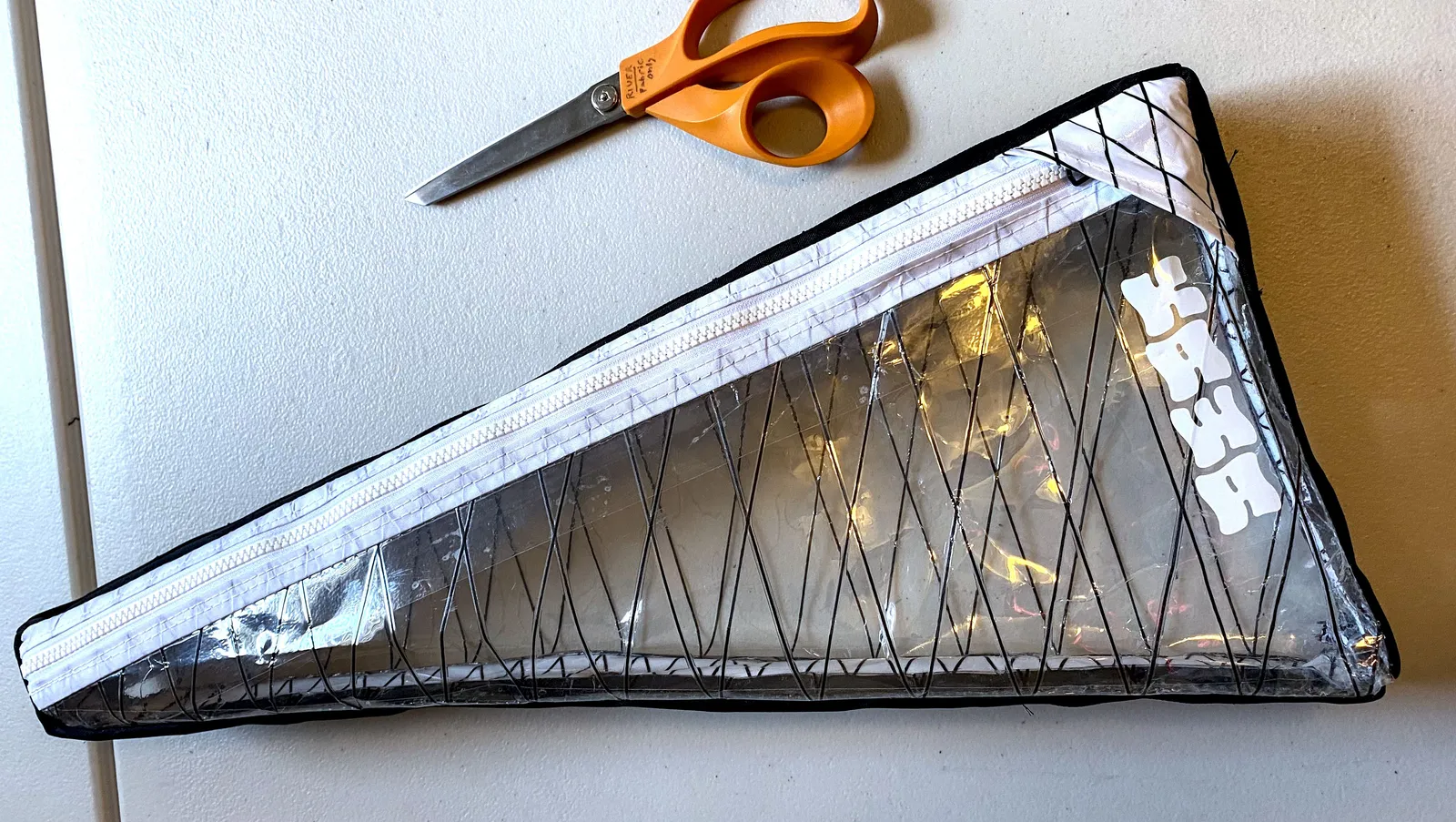
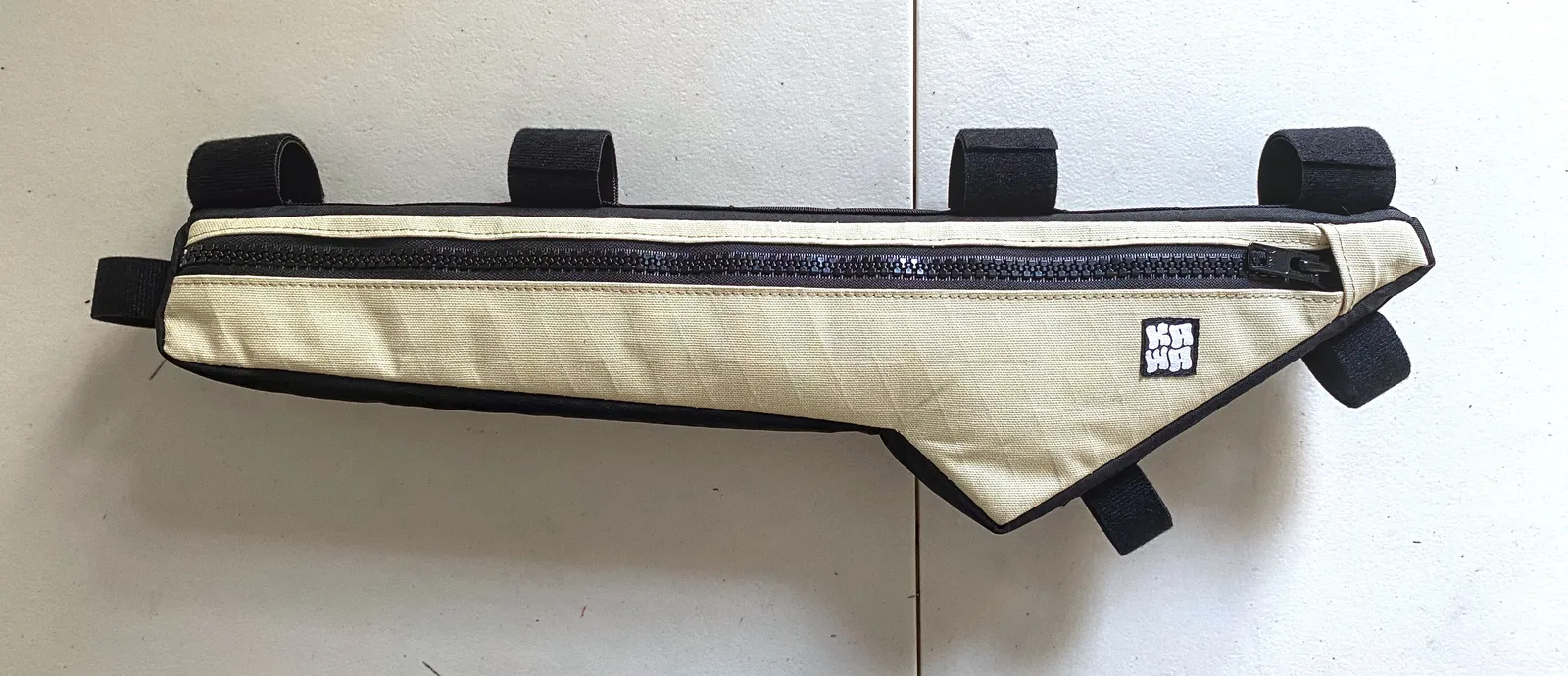
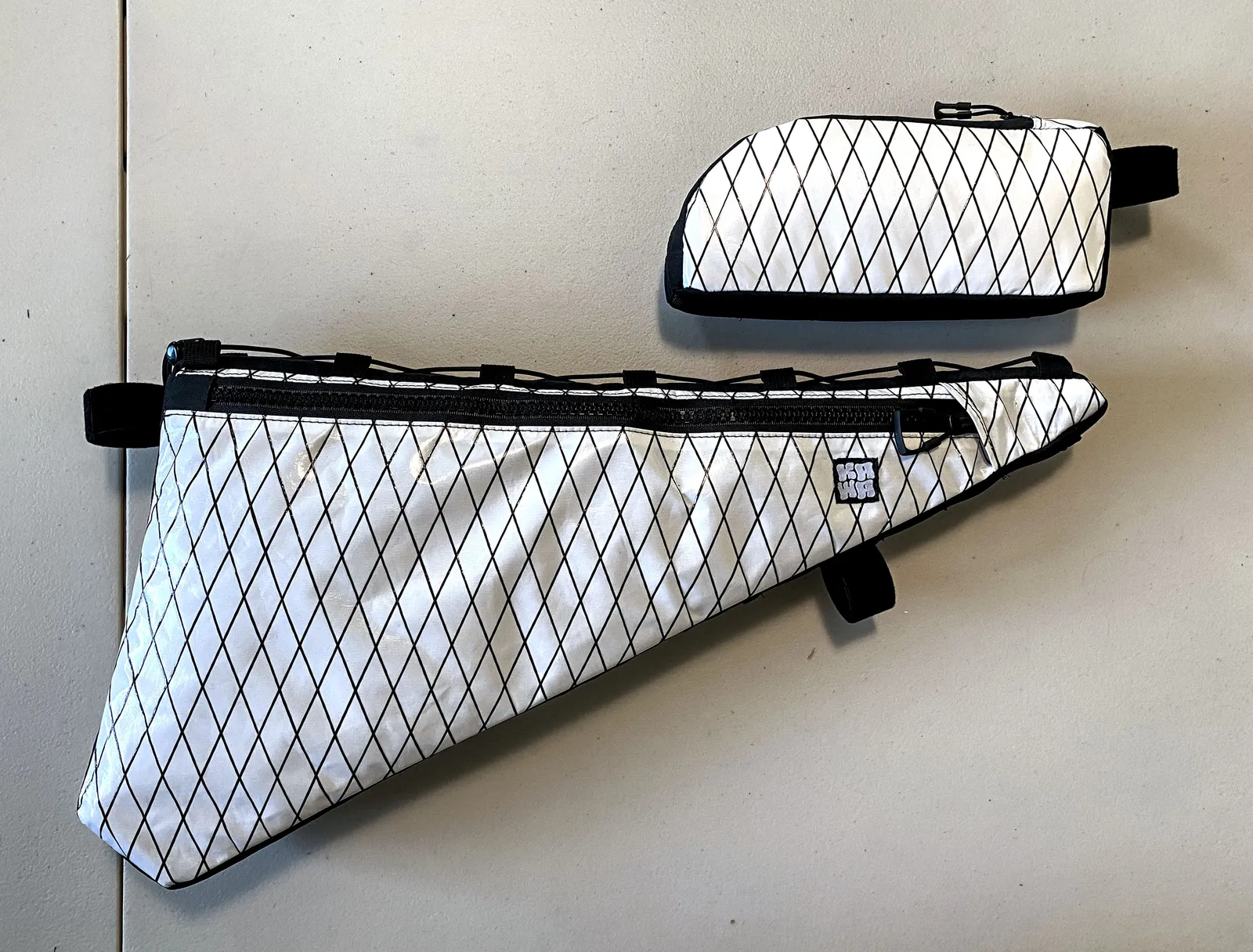
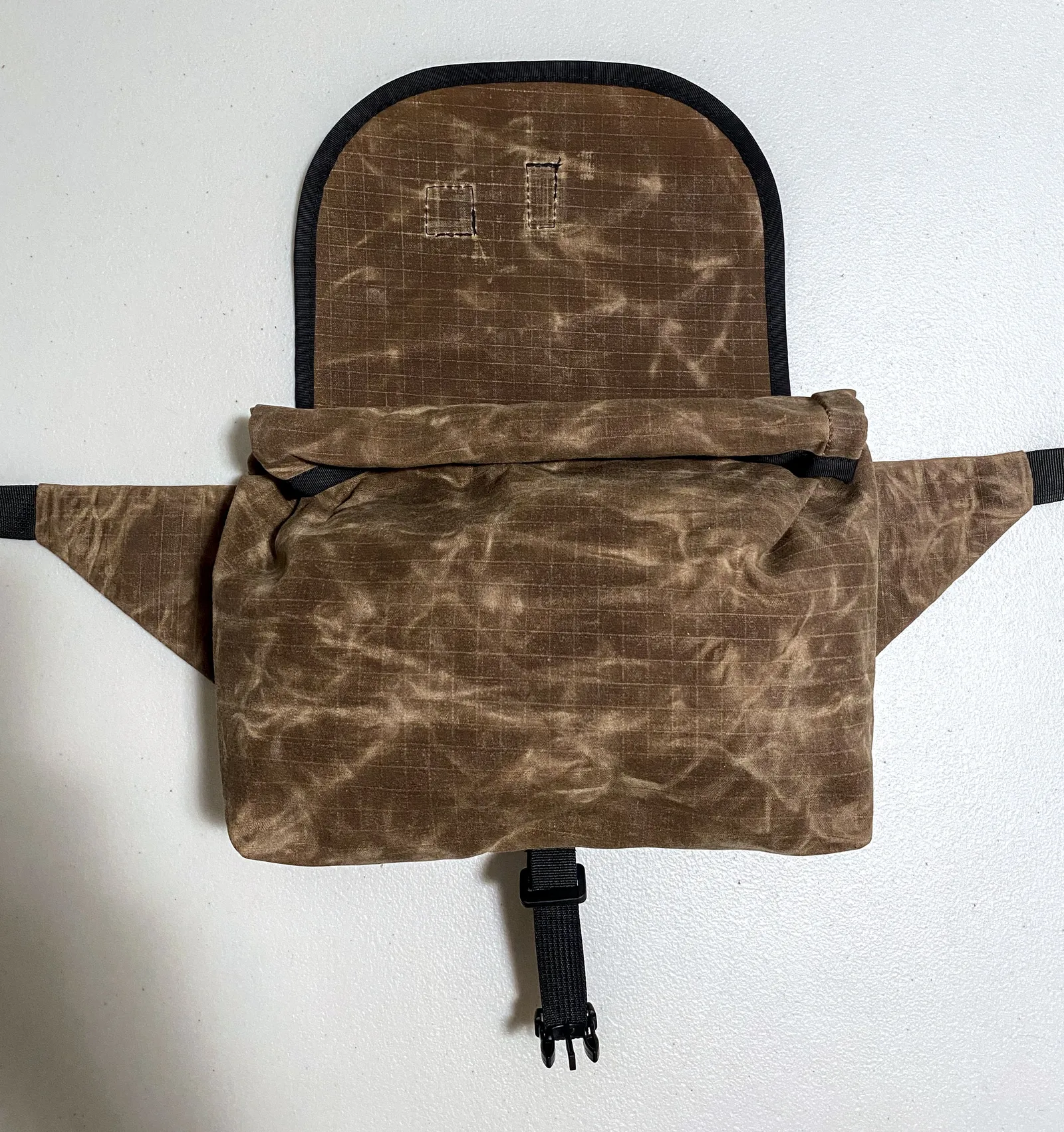
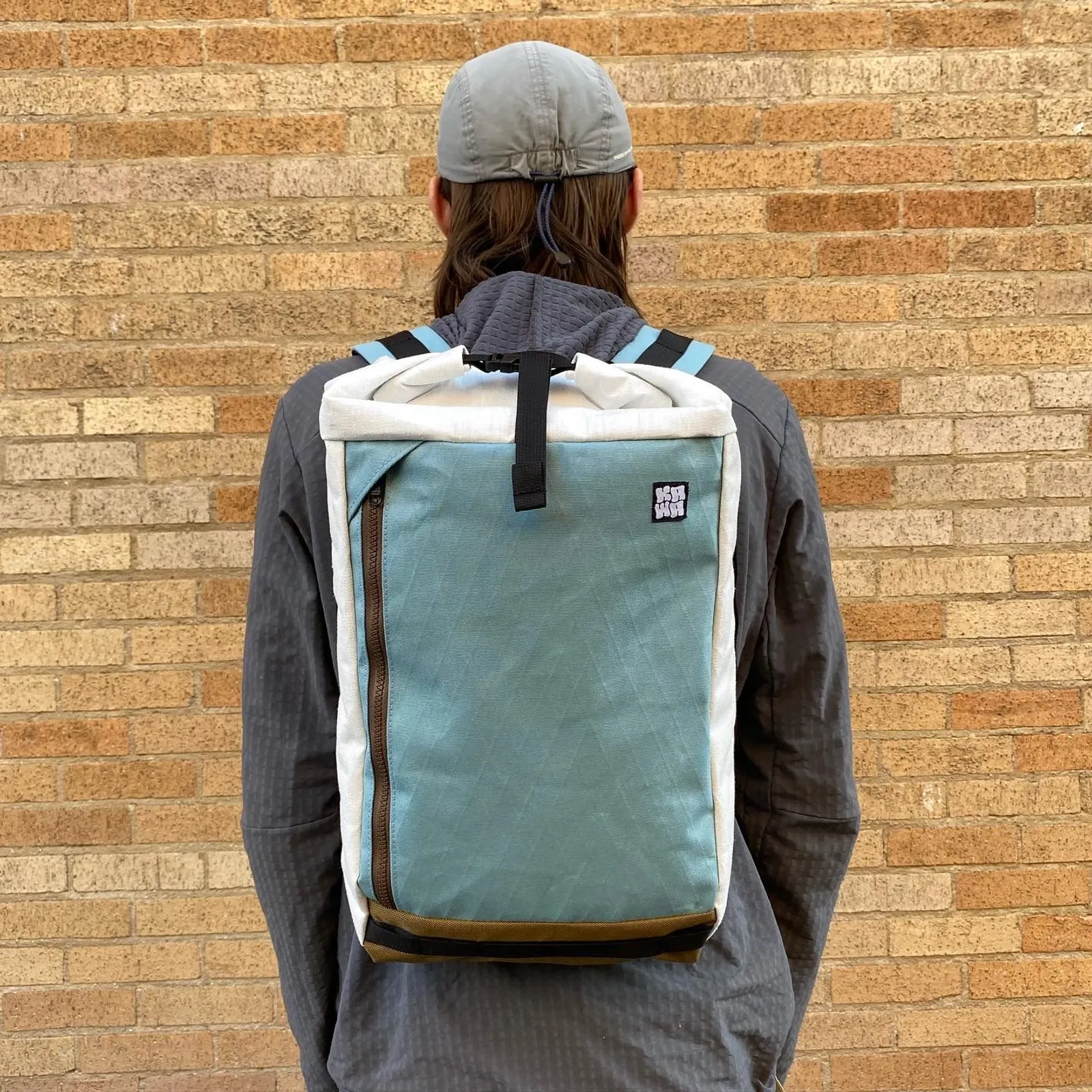
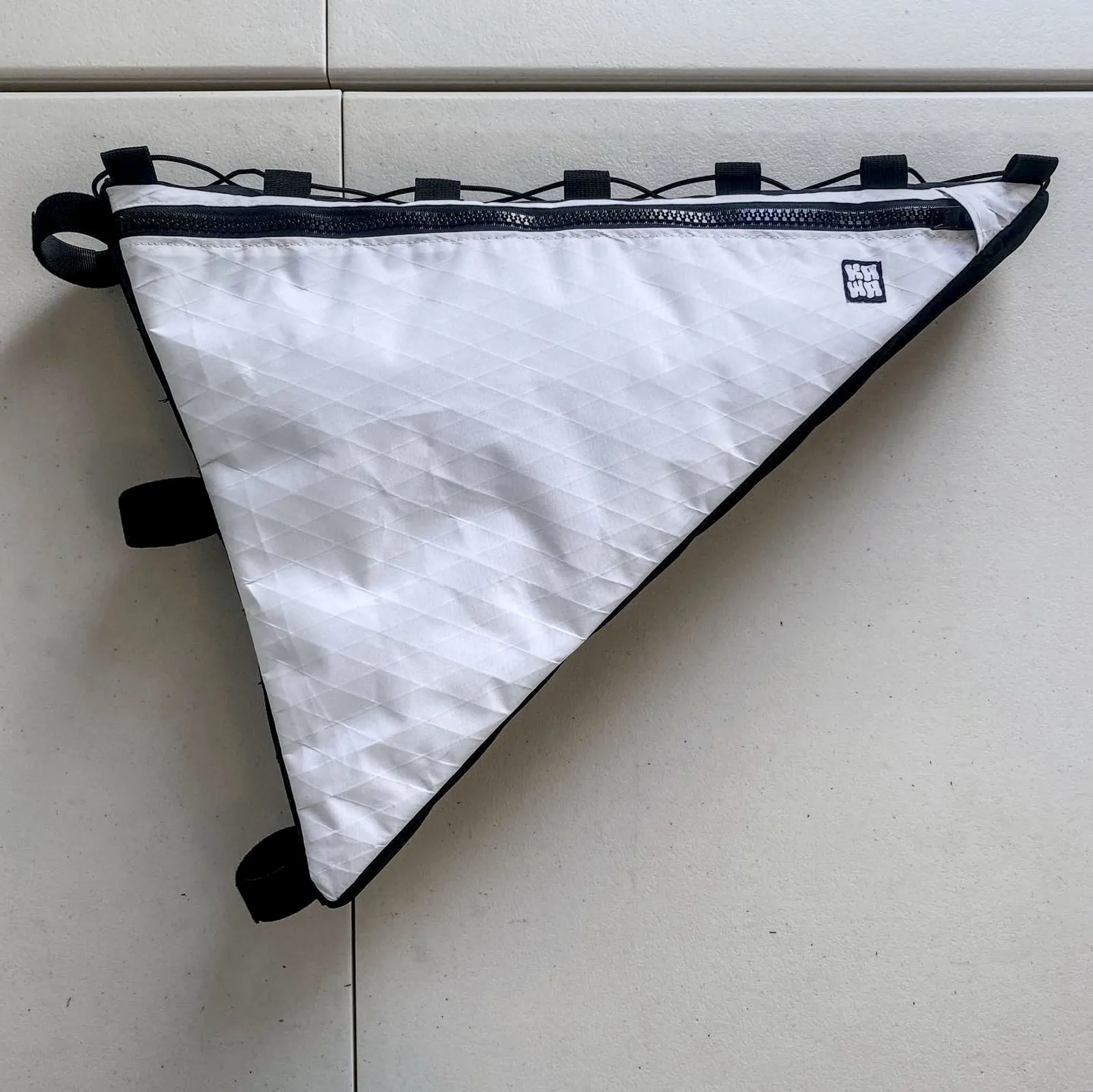
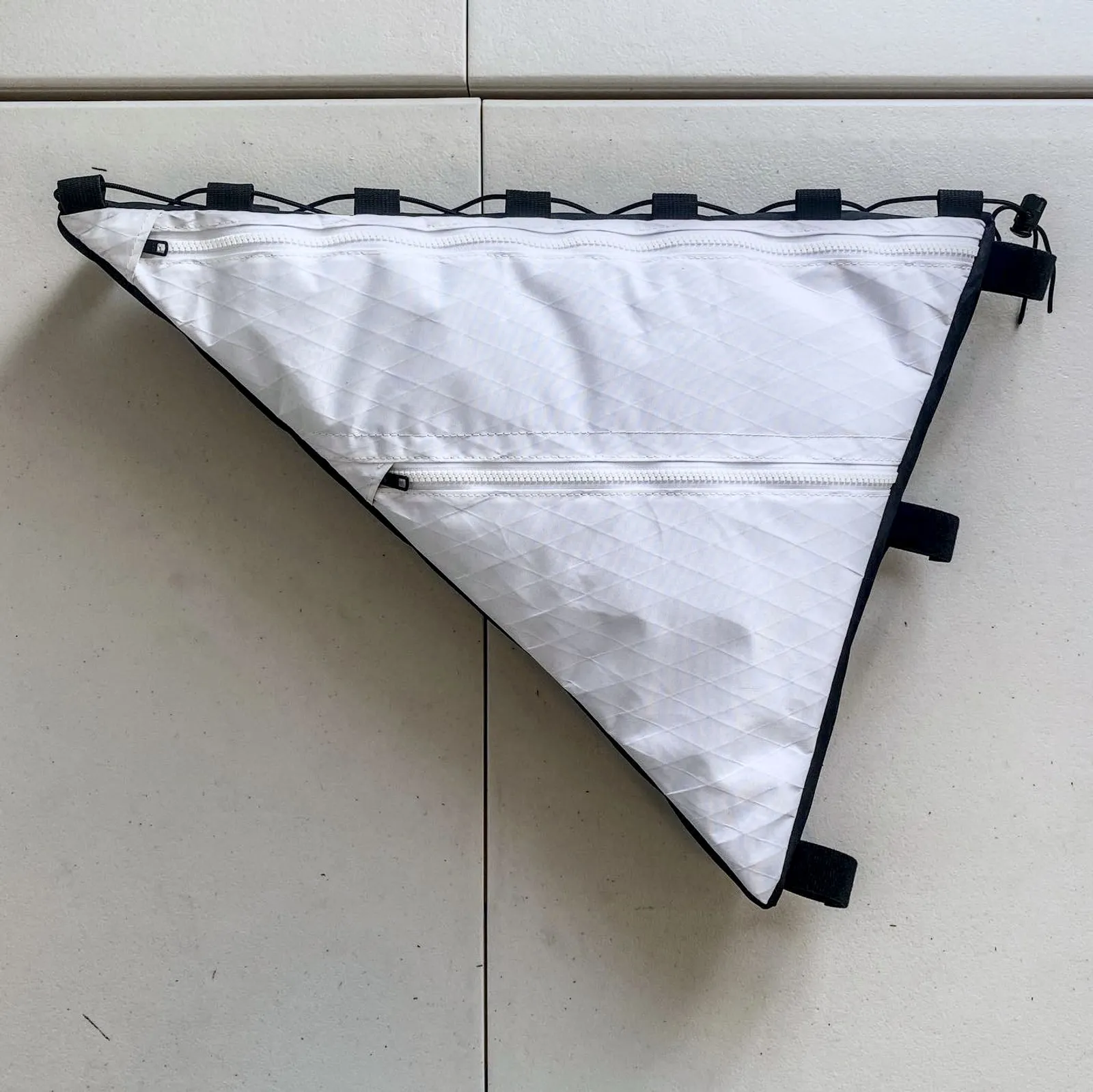
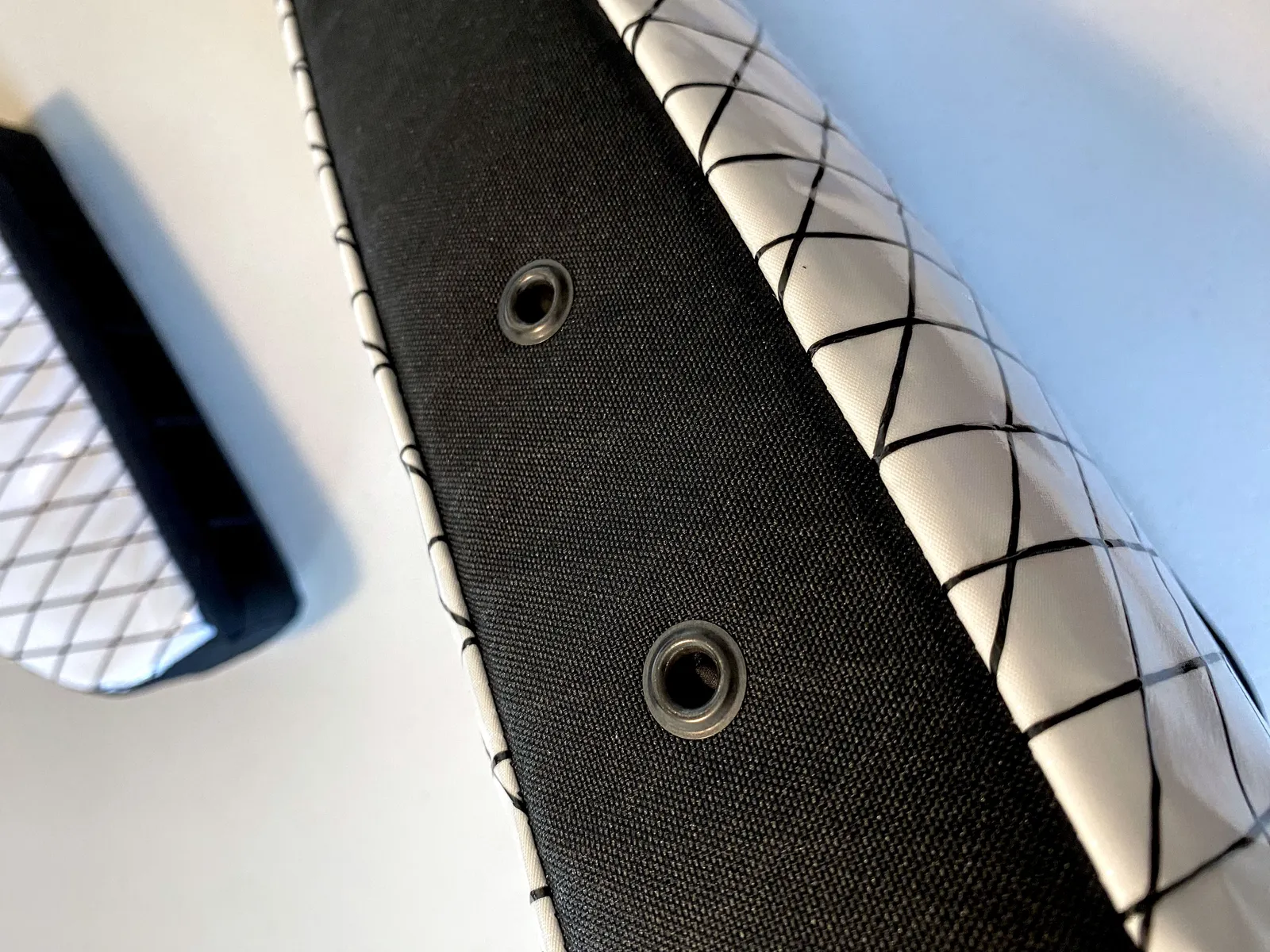
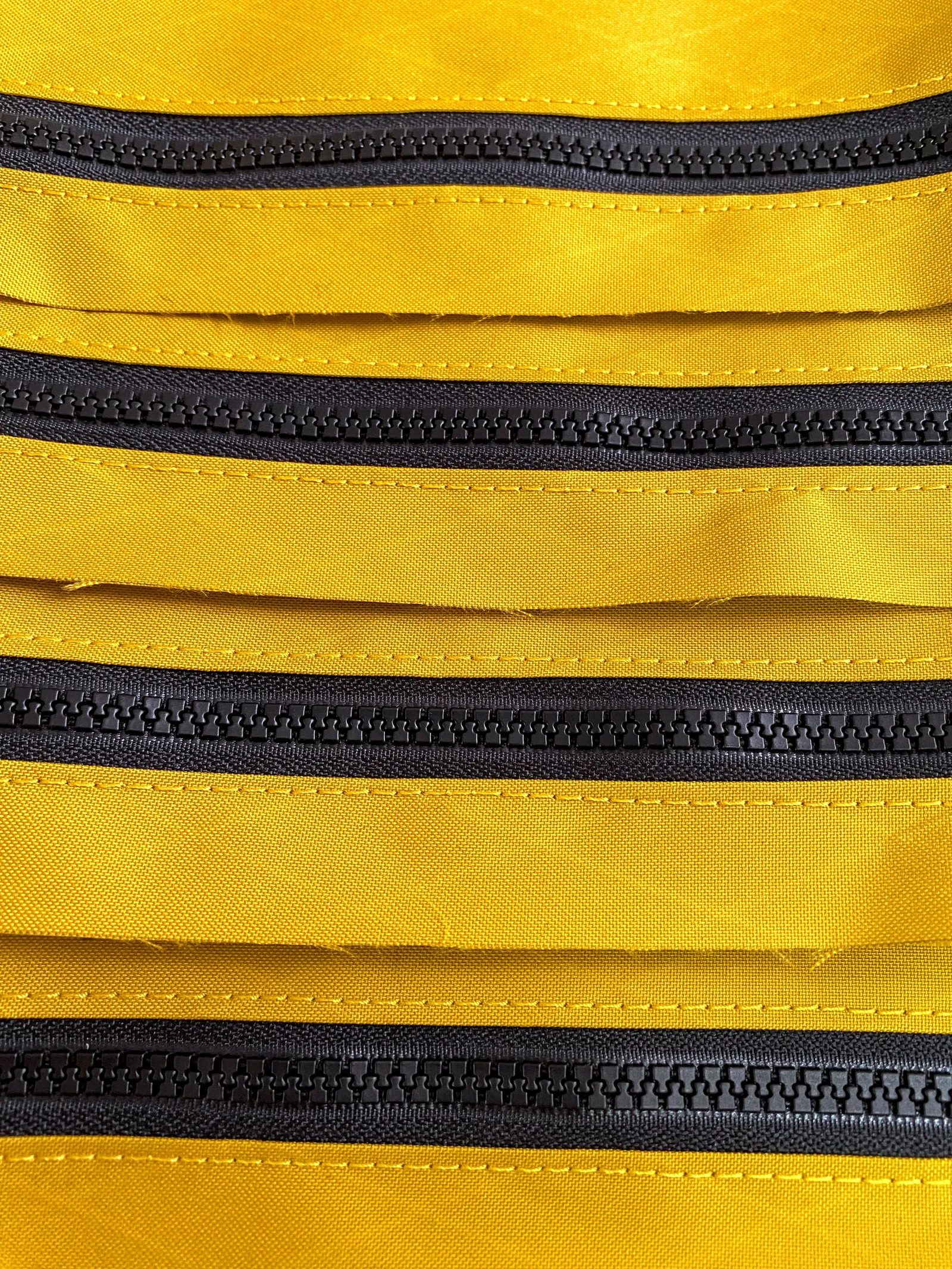
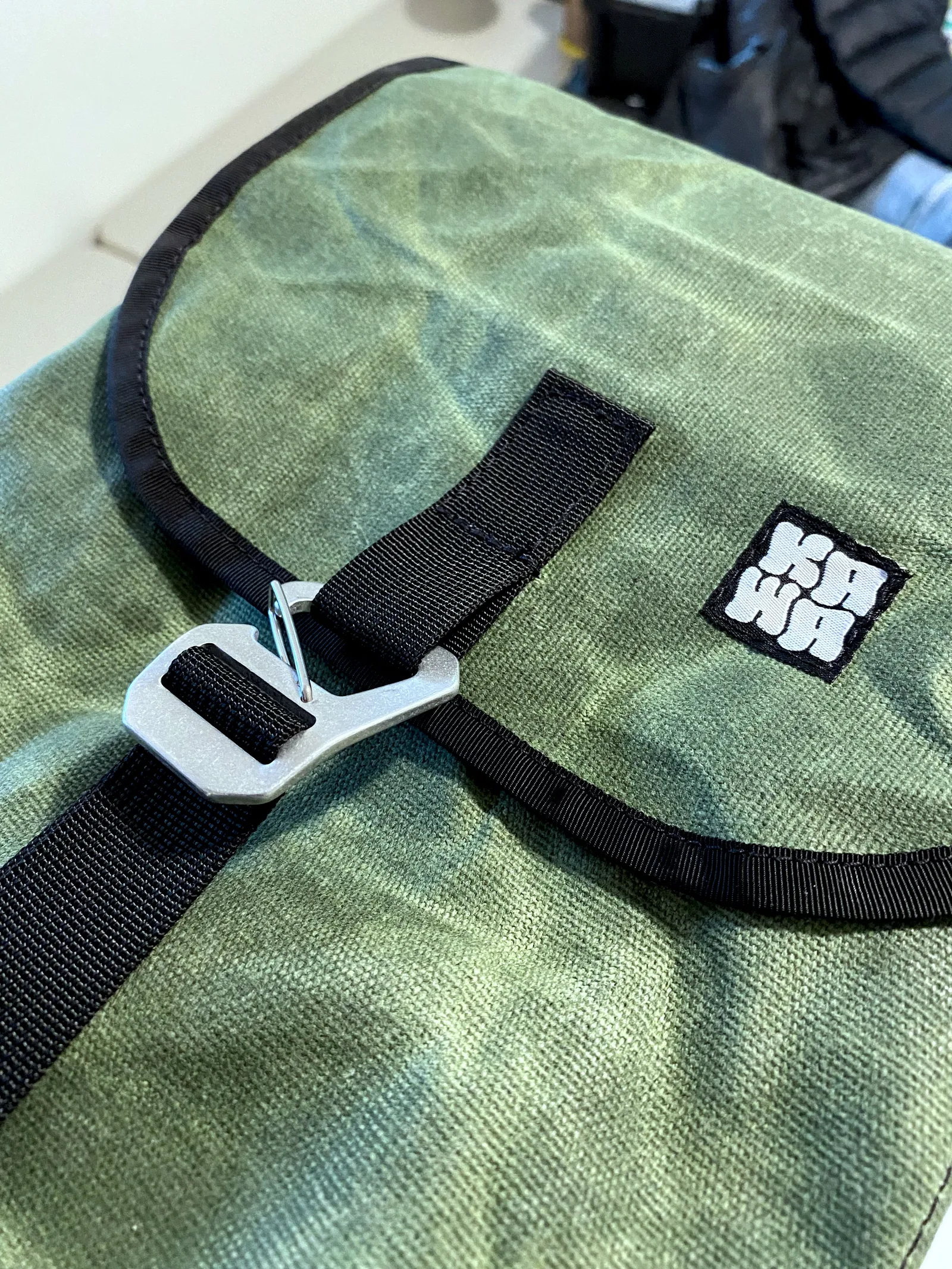
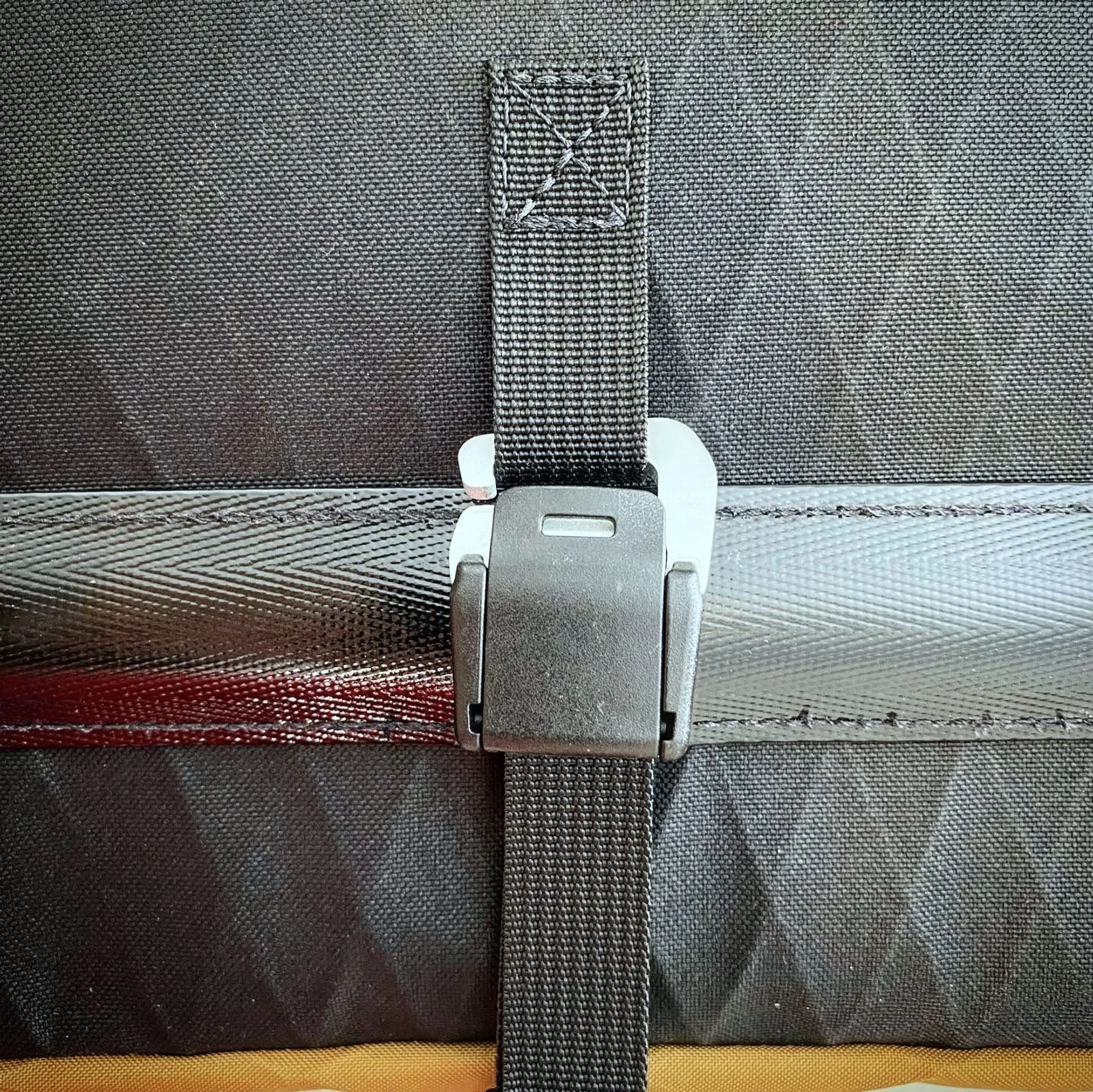
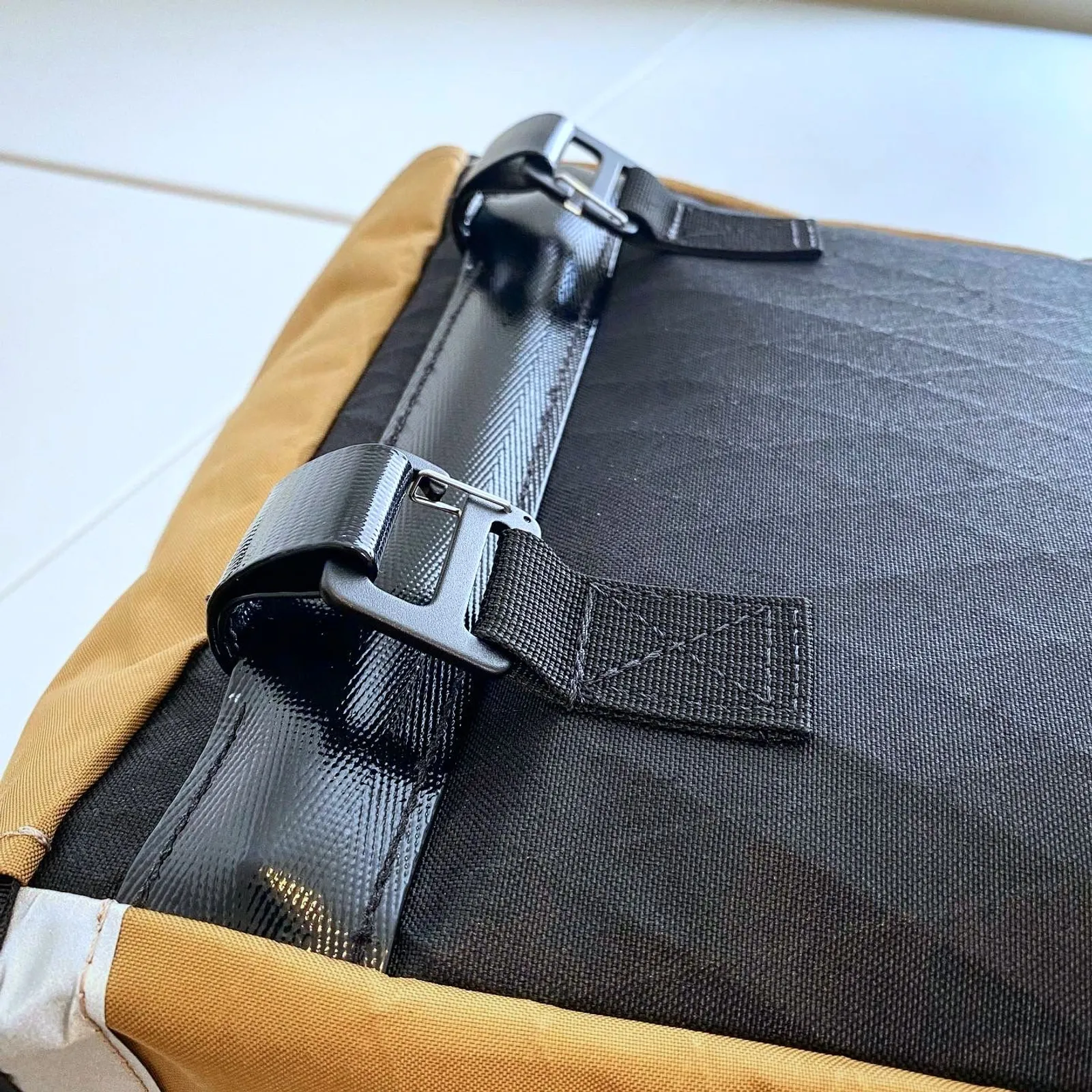
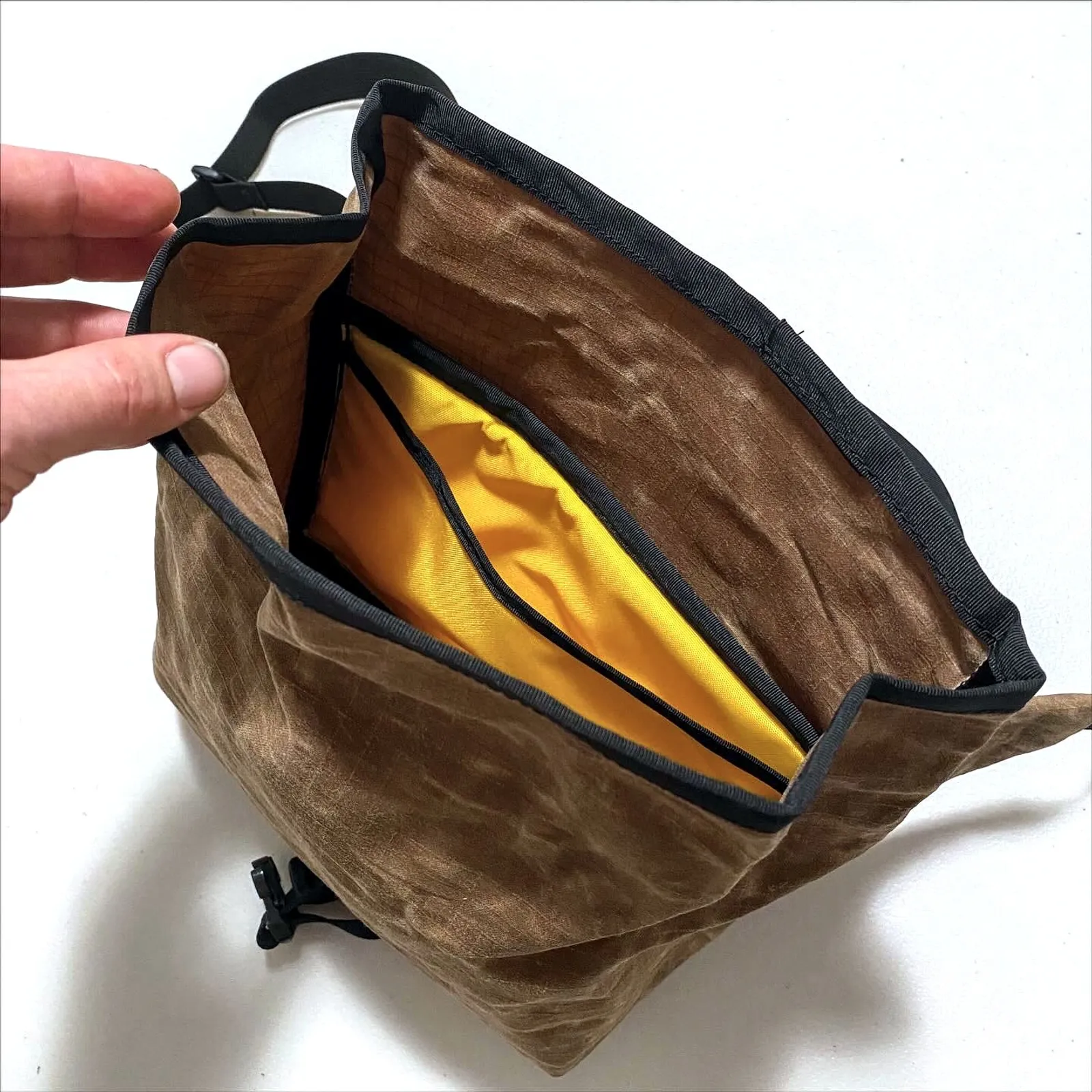
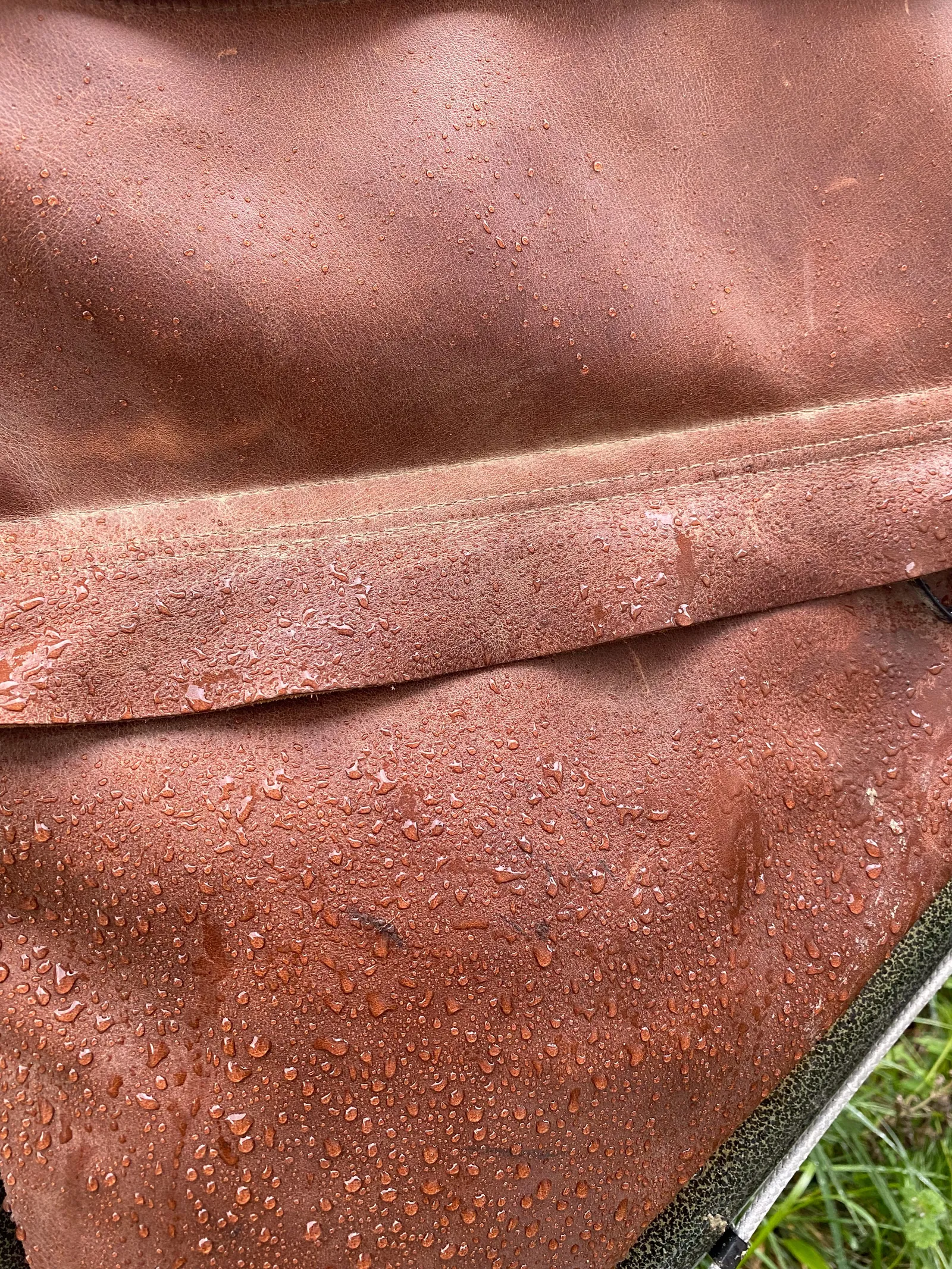
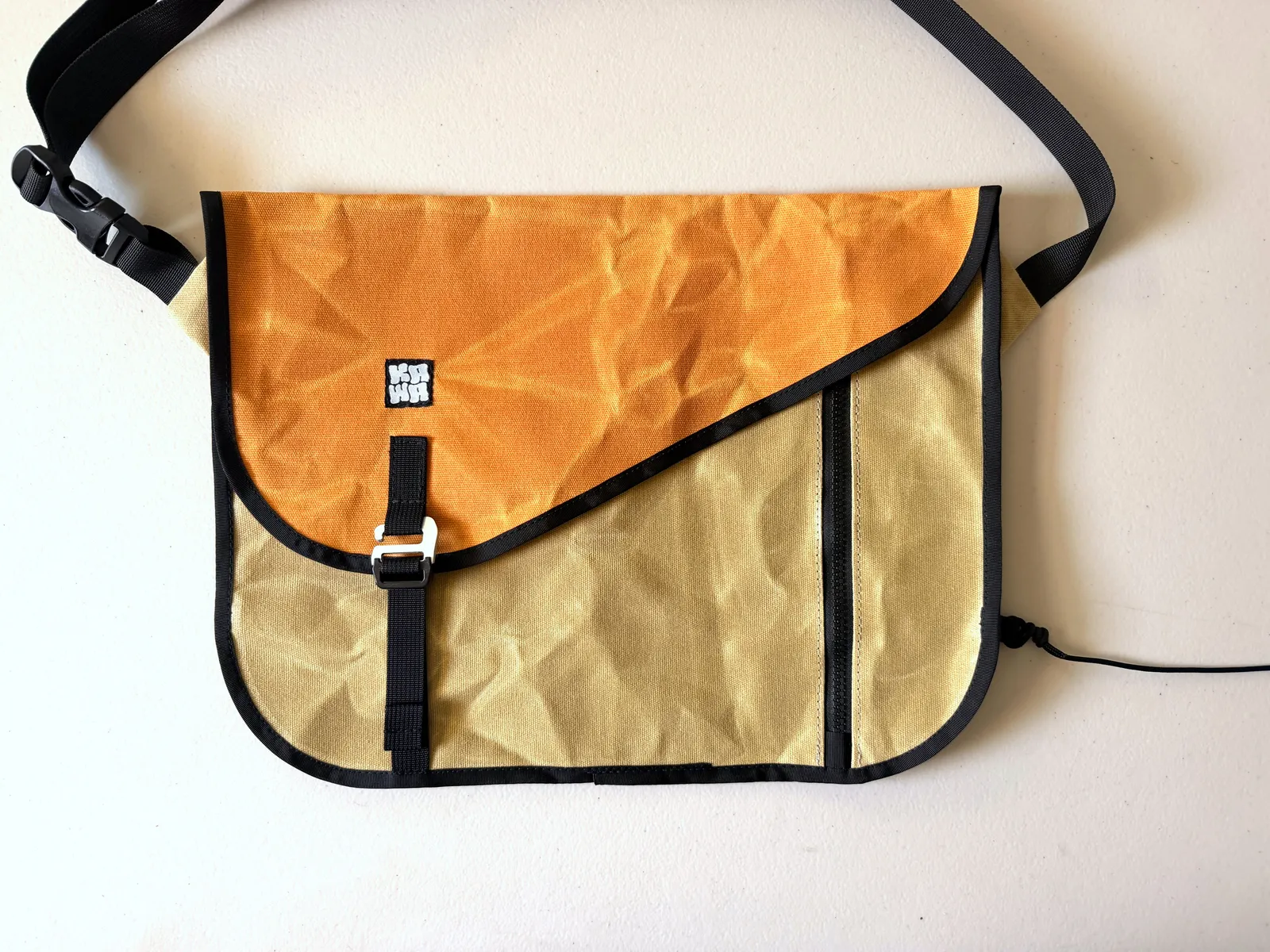
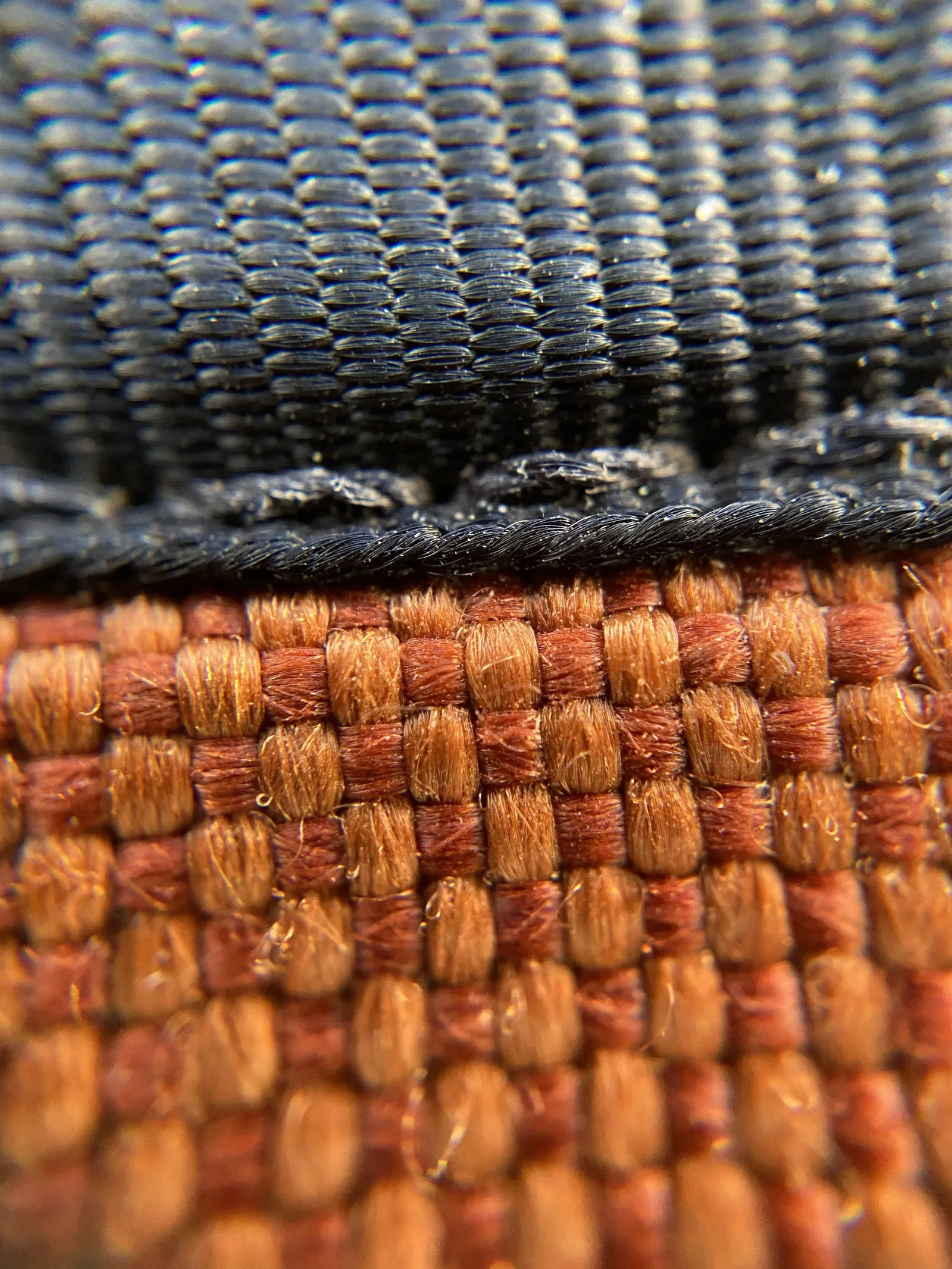
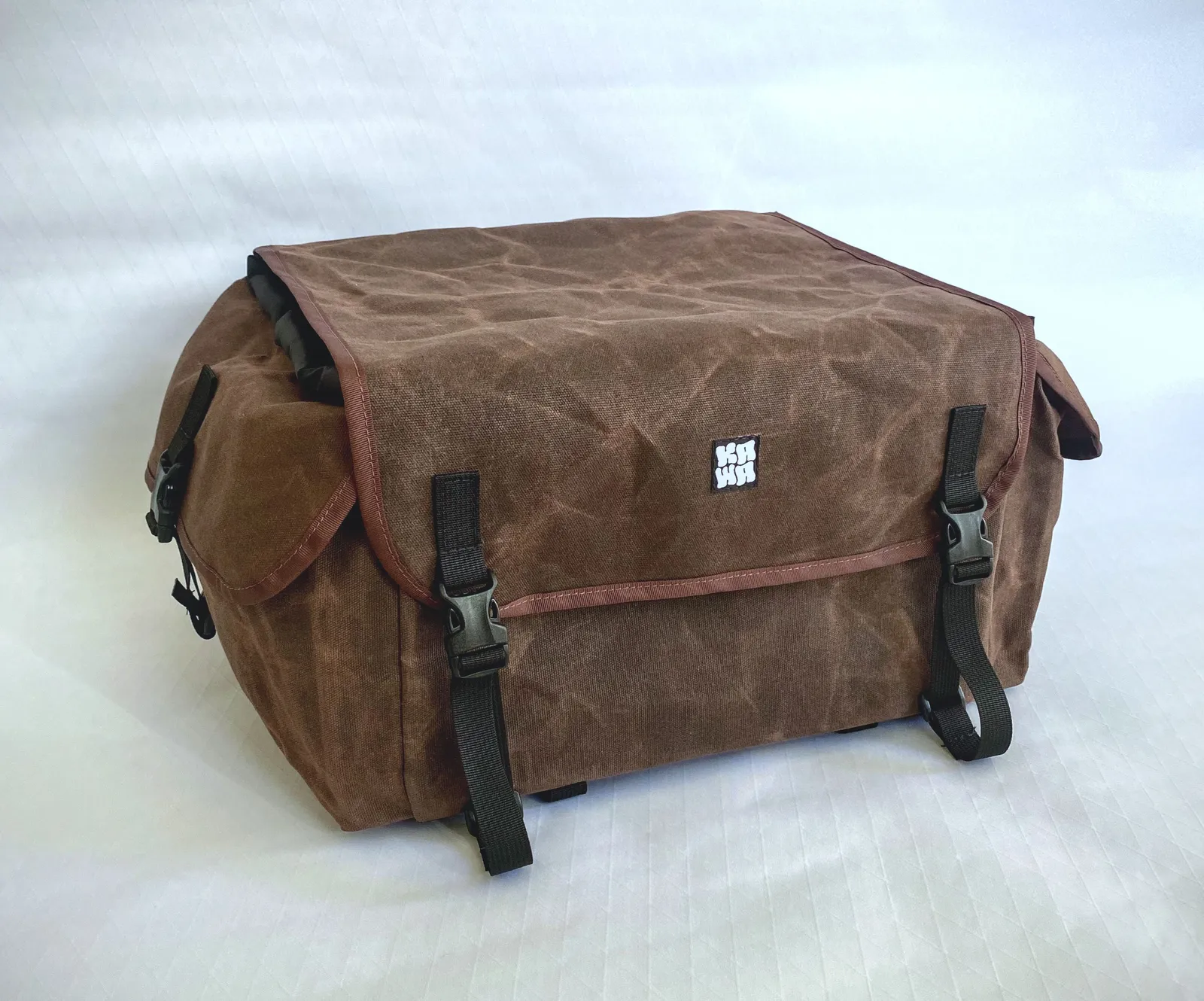
I prefer to use parts and materials that will make my final product have a long usable lifetime, as well as being as environmentally friendly as possible. Recently this has included testing many natural materials in bags such as waxed canvas, leather, hemp, and other natural fibers. I have been interested in some of the new methods of using natural fibers to create modern technical capable fabrics with natural materials. An example is the X11 fabric from dimension polyant that uses a woven cotton face laminated to a polyester ripstop grid and PET backing. This fabric contains far less plastic, yet still is just as waterproof, and retains a large amount of strength from the synthetic ripstop grid. I have been using this fabric in many of my bags and have been excited by how well it performs compared to cotton canvas on its own. With many of my bags I still have to make compromises from using natural materials. High stress points, webbing, thread, and high abrasion areas still last the longest with synthetics. Even when design limitations demand synthetics, I have found many options for high quality recycled fabrics that have a high strength but lower environmental cost.
Production
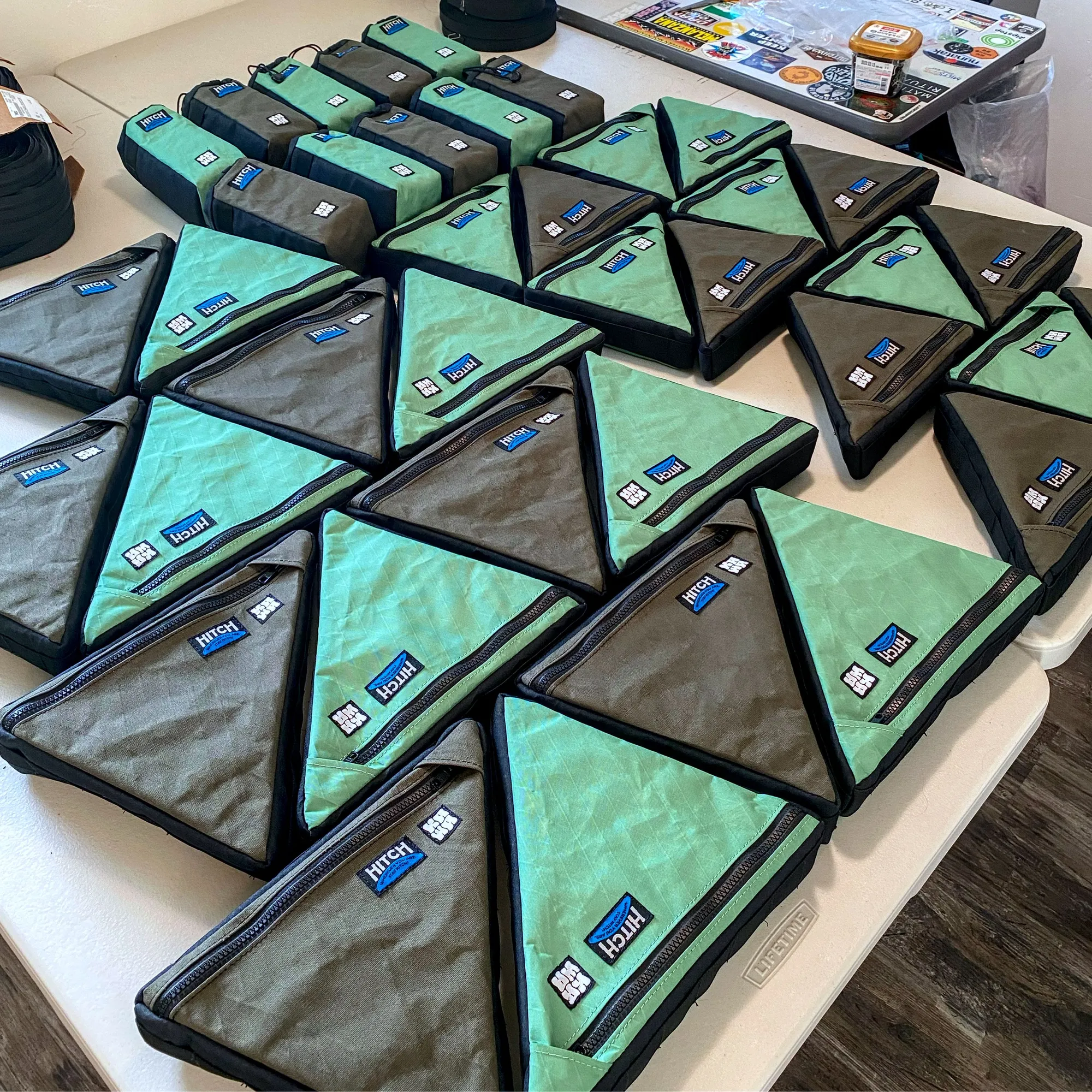
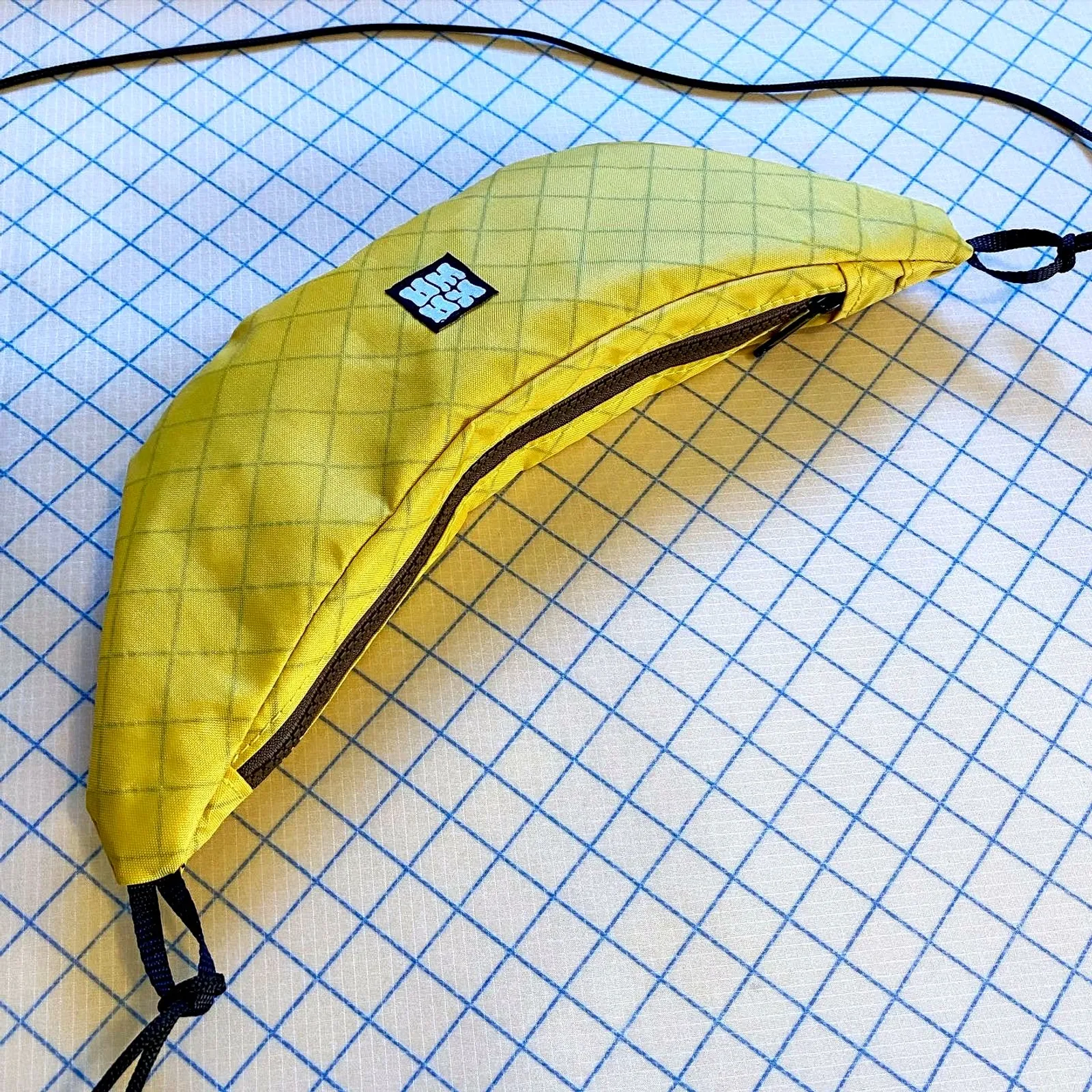
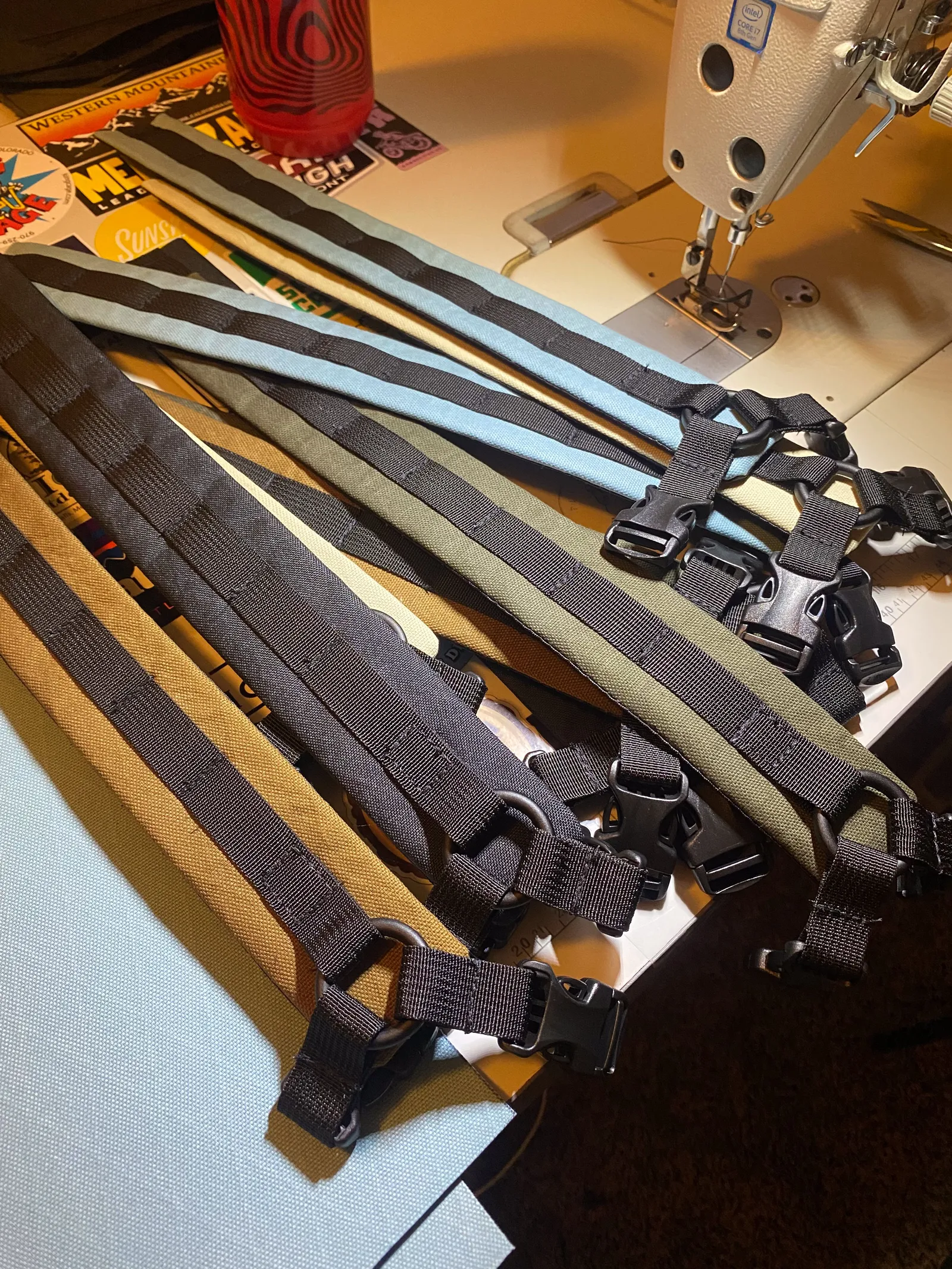
With Kawa I have designed and produced hundreds of unique bag designs, many of them custom one off solutions. Many of these have also been production bags where I have learned the process of creating an efficient production line. Over time I have been able to change my designs and patterns to create products that are both easier to produce and just as functional. Some examples of this have been simplifying patterns to use fewer seams, this not only makes things easier to sew, but also more waterproof and durable. Another is being aware of where things are placed on my bags to make it easier to sew on my limited equipment. I don’t have a bartacking machine so I need to adjust how straps are attached in certain areas to make sure they are strong and efficient to attach. I have also made many homemade solutions to manufacturing constraints. With my webbing cutting I created a small heat cutting station with a box, glass plate, and hood fan ducting, that allowed me to increase my cutting speed and accuracy. Small makeshift production innovations like this are essential to having a working sewing operation.