My Piolet Bike Check
Ever since I was a teenager I’ve been strapping bags on bikes and heading out on multi-day trips with my friends. After college I took a year off and did a four-month-long bike tour across Asia, which really cemented my love of long distance cycling. My favorite thing about being on a bike is feeling completely independent. When you’re riding you carry everything you need to live, and can cross huge distances, all while still being completely self-powered. The excitement of what the day will bring, the landscapes you’ll see, and what you will learn about the places you travel through keep me getting back on the bike.
The Frame
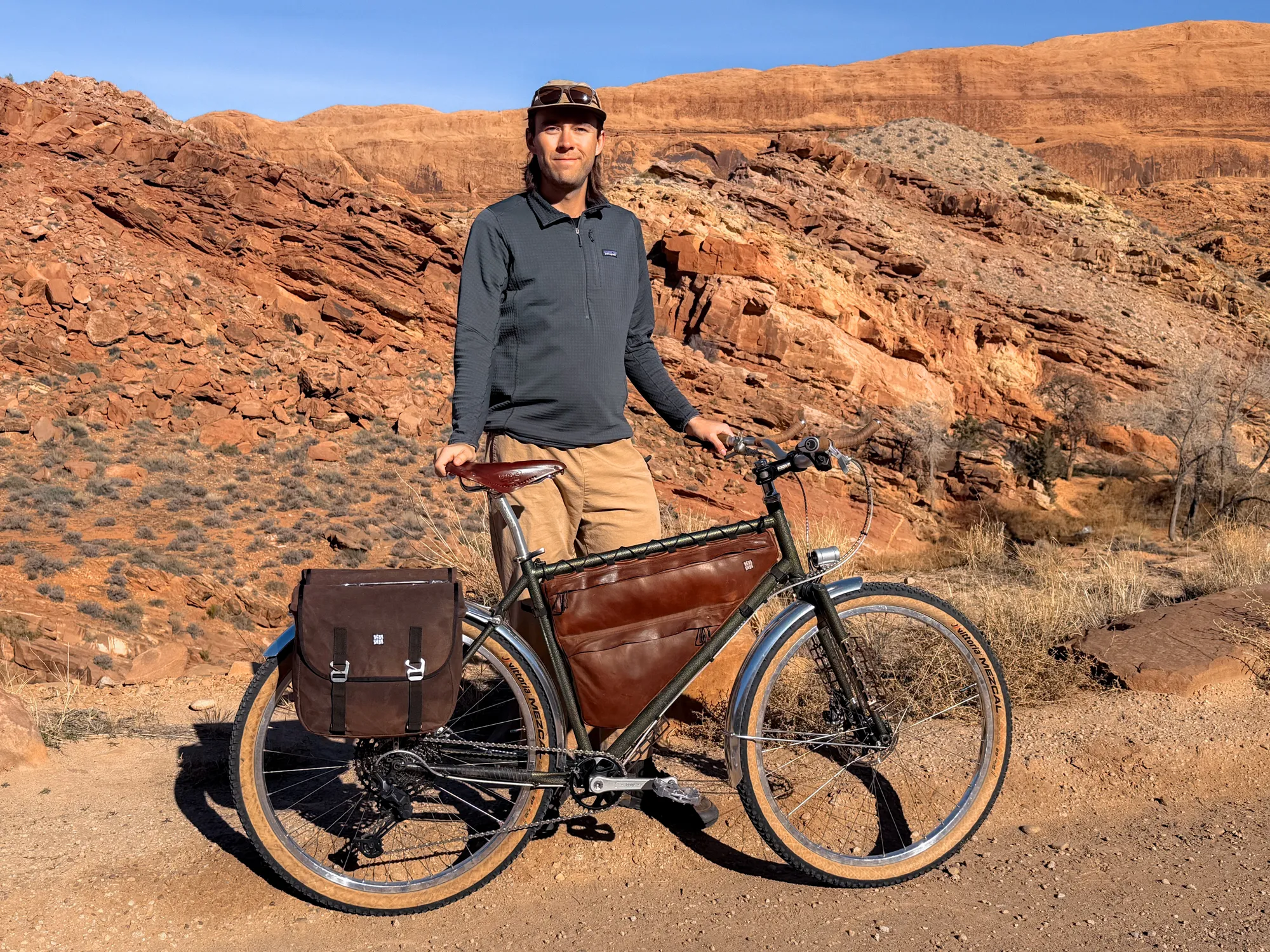
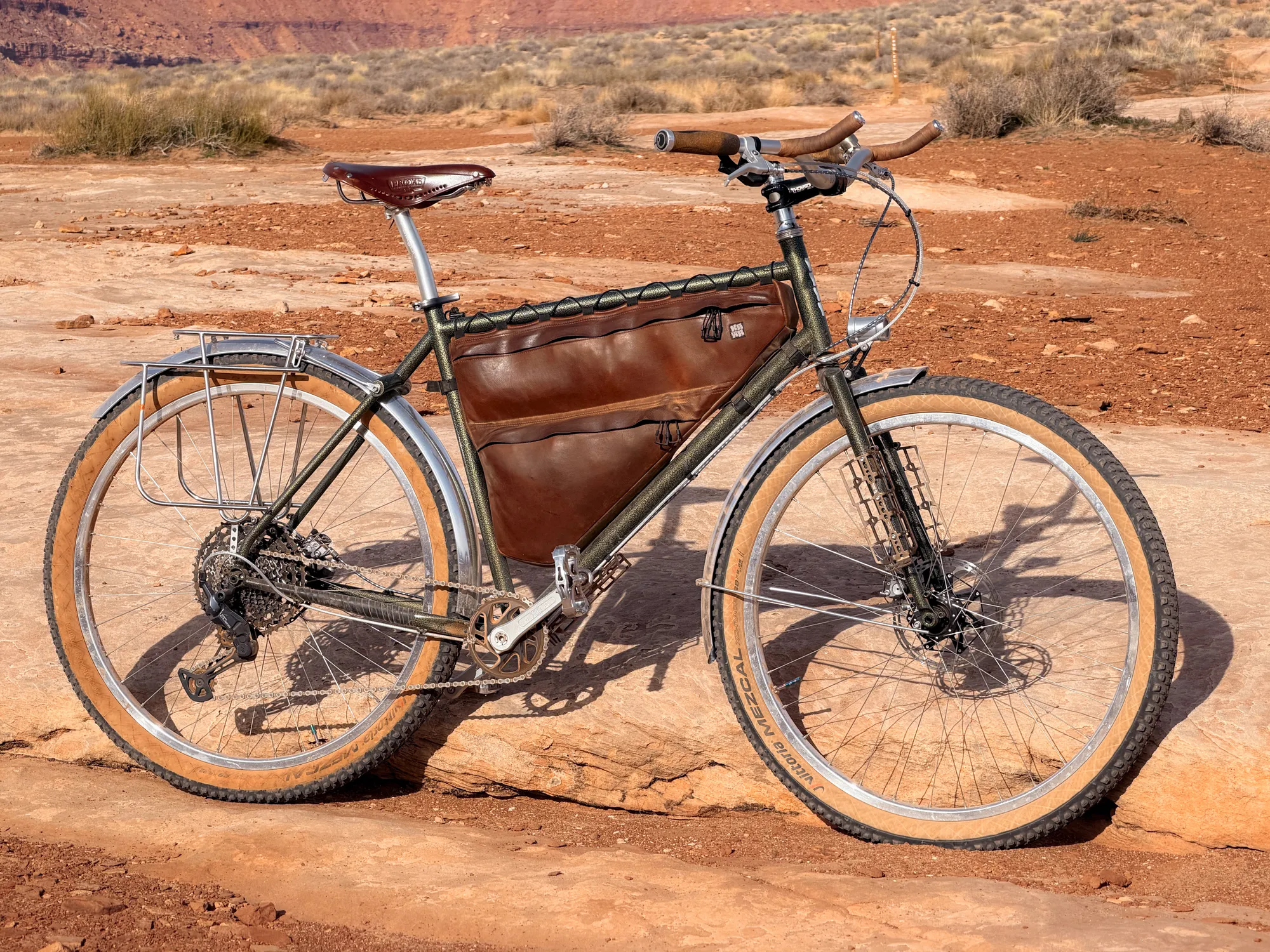
My current bike was inspired by my previous go-to bikepacking bike, an old On One Inbred. The Inbred was perfect for going just about anywhere, I loved the feel and look of the bike, and when I saw the new Piolet frame from Velo Orange it seemed like a perfect modern successor. The wishbone seatstays and segmented fork were a perfect homage to my old frame, and it had all of the other features I was looking for in a modern bikepacking bike.
The first thing I did when I got my frame was repaint it. I wanted to give it some more character and had the idea to give it a pitted metal look after seeing a similar paint job done on a classic track bike. I made the underlying color a muted green, in the sunlight it looks like a mossy boulder, but my favorite part of the new paint is the nice pebble texture it has. I tried to find as many other natural colored parts to match the aesthetic, like brown anodized Wolf Tooth cages and brown cotton grip tape.
Components
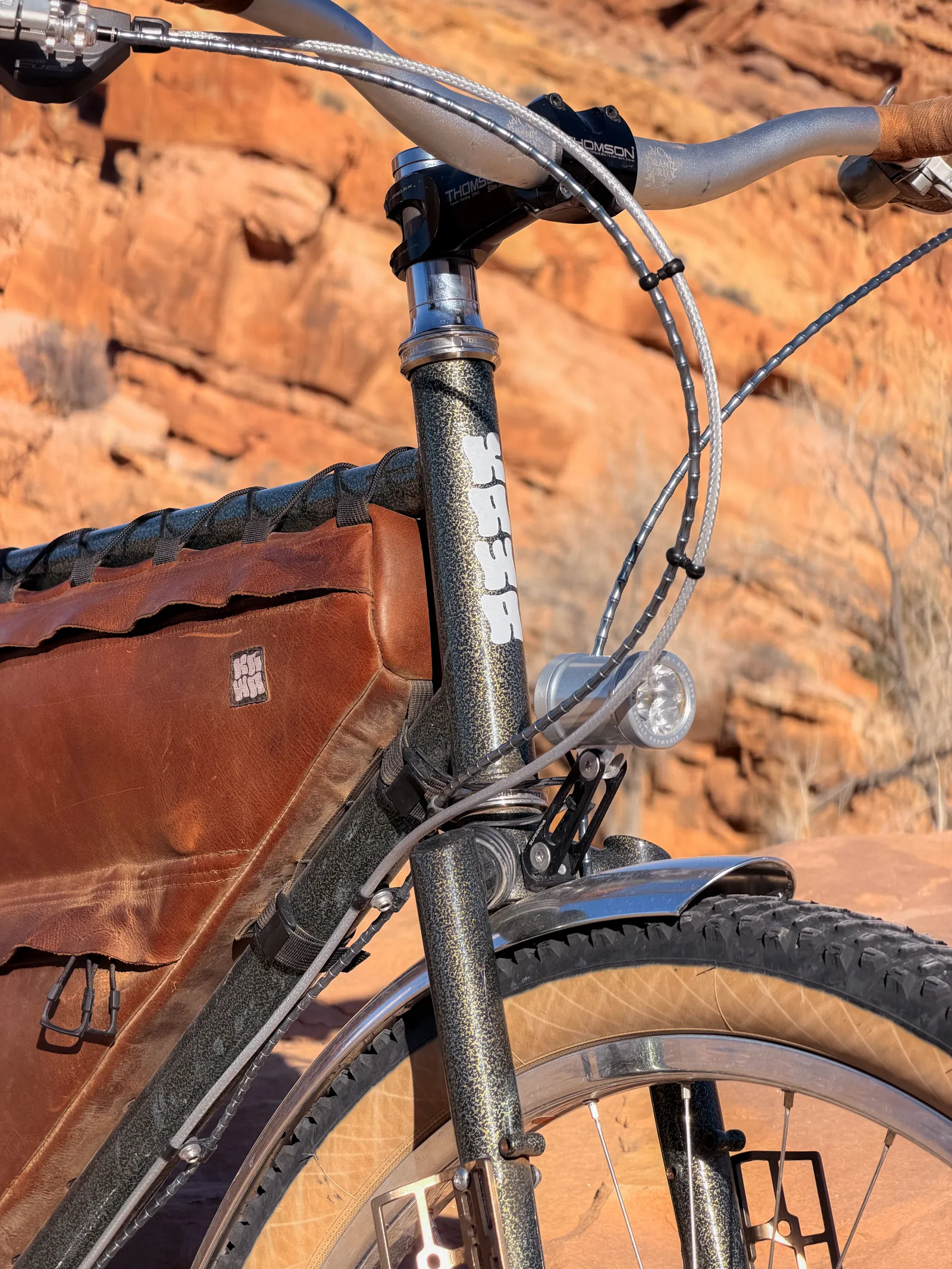
For the components I wanted to make the bike as durable and functional as possible. Many I have used on other bikes and know they are tried and tested, my Thompson stem, for example, has been on three other bikes of mine and was given to me by a friend who used it on his old race bike. But some components I’m trying out for the first time, like the new Cues drivetrain. I was excited about its claims of durability, but it seems like the red desert dust is destroying it just as fast as any other drivetrain I’ve had.
I chose the Velo Orange Campeur rack for its solid attachment and fender integration, but it also looks great. I have Tanaka fenders mounted to the underside of the rack, cut extra short for off-road use. My dynamo hub and Sinewave light add to the bike’s self-reliability, on long rides and tours I’m able to create my own power and never need to charge my light. For brakes I wanted to make the best feeling mechanical system I could, so I could feel more confident while loaded on steep descents. I’m using Paul levers and Growtac brake calipers with Jagwire Elite Link housing. With this setup I get more than enough power, and it honestly feels better than many hydraulic brakes I’ve used.
My pedals are the MKS Pretzels. I’ve used MKS pedals for many years and love how durable and serviceable they are. The new pretzel shape is also comfortable and the natural curvy form adds a fun look.
The Bags
With my bags a big inspiration was classic horsepacking equipment. I worked for the Forest Service for a couple of seasons, where we extensively used horses to carry our equipment deep into the wilderness. We used leather and canvas bags that had been in service for many seasons before, with proper care and maintenance these bags had lasted longer than most synthetic materials would in the same environment, and after all of those years they looked beautiful. Leather and cotton canvas saddlebags took on a patina that told the story of their use, and gave them a look that you could never recreate with modern materials.
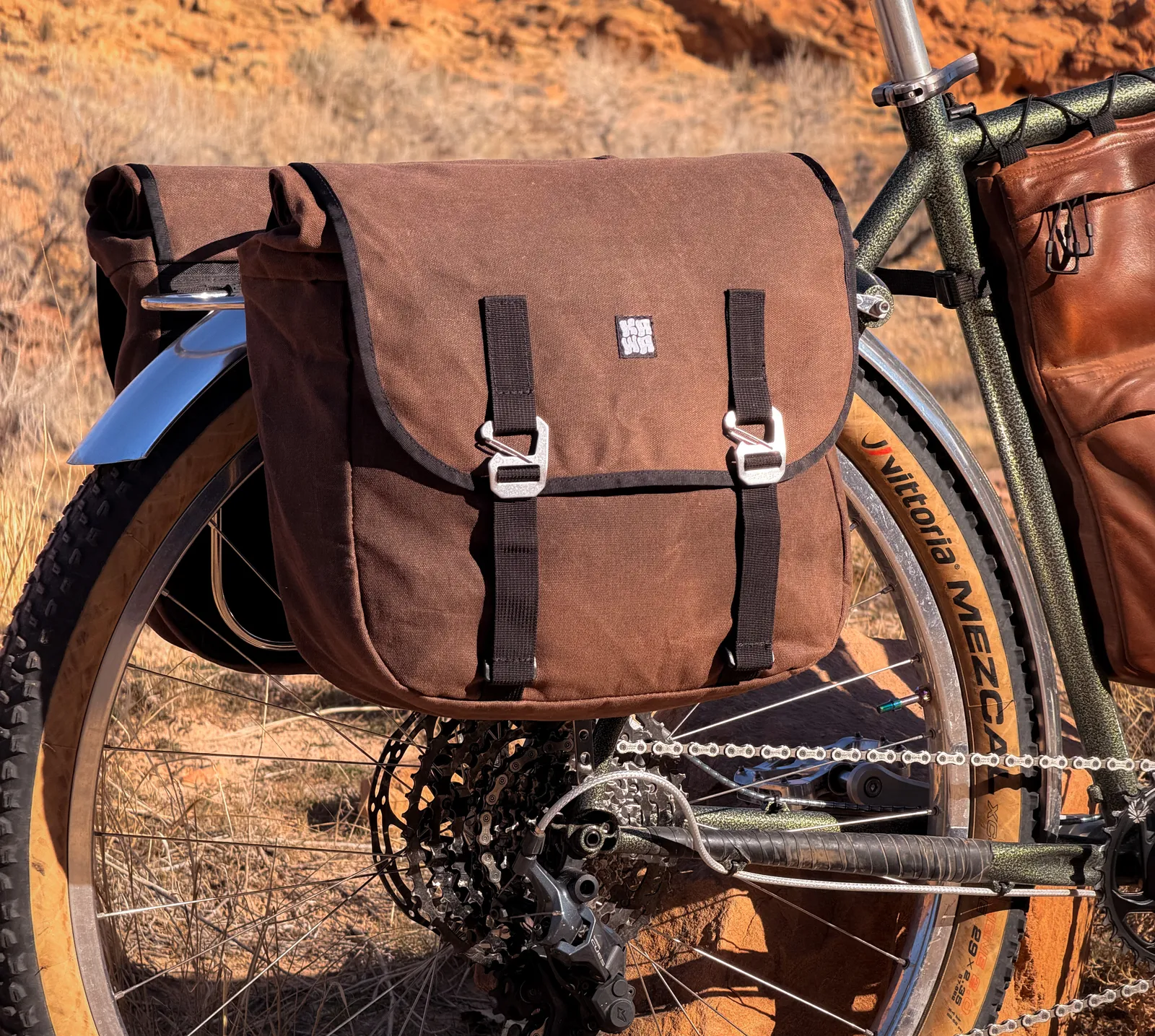
I wanted to give my bike the same timeless sturdy feeling and look, and was interested to test how far you could push natural fabrics like cotton and leather. I designed my panniers to look and function like many of the horse panniers I have used, with a flap covered rolltop, waxed canvas, metal hardware, and dowels in the back keeping structure. Part of the reason I liked the Piolet geometry is the extra long chainstays, which keeps panniers more stable. I made them wider than normal to use some of the extra length of the frame, but also kept them low profile. This shape gives the panniers a large volume but also makes it easy to walk next to the bike and keeps them from getting caught on brush. So far they have been solid and stable on any terrain.
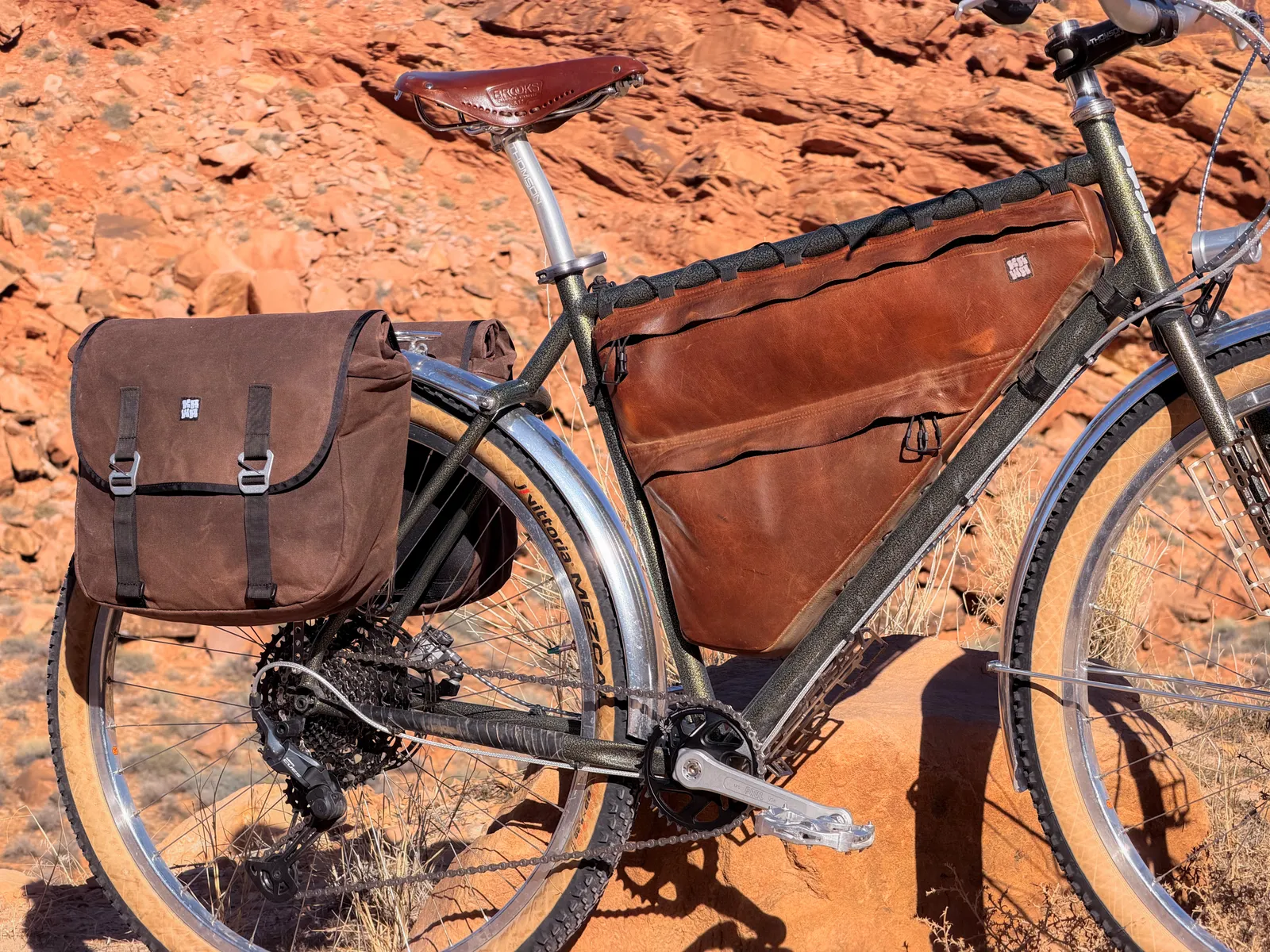
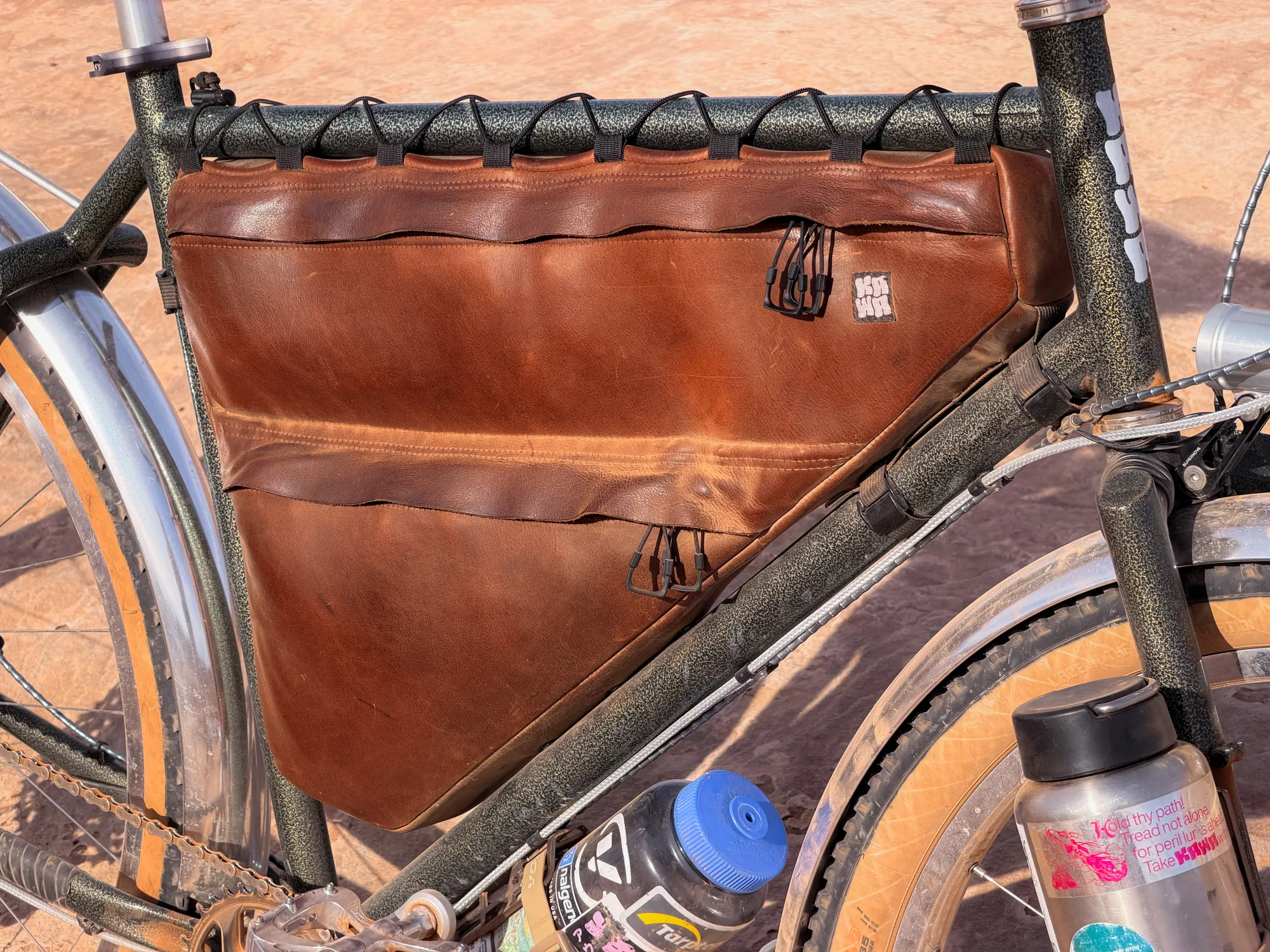
For the framebag I decided to go with leather, a first for me, as I had never worked with leather before. It was definitely tricky to learn, but it was a super fun bag to make and I will definitely be working with leather more after this. One of the hardest parts was the final step of turning the bag inside out. With the thick leather and reinforced edges it was a real workout to get everything in place. After sewing it I waxed it to condition it and help keep it waterproof. I’ve taken the bags on quite a few trips so far and they have exceeded my expectations for natural materials.
White Rim
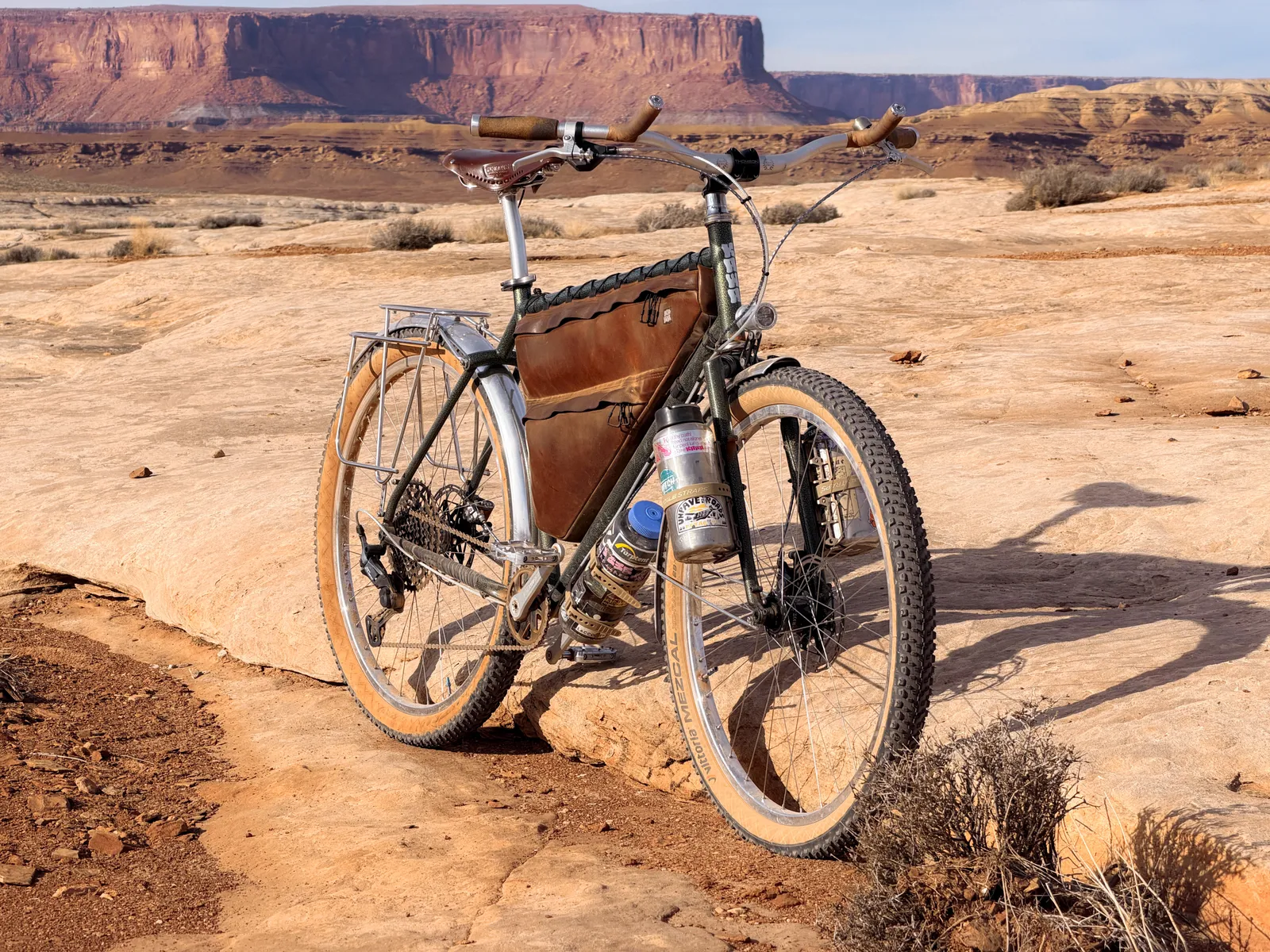
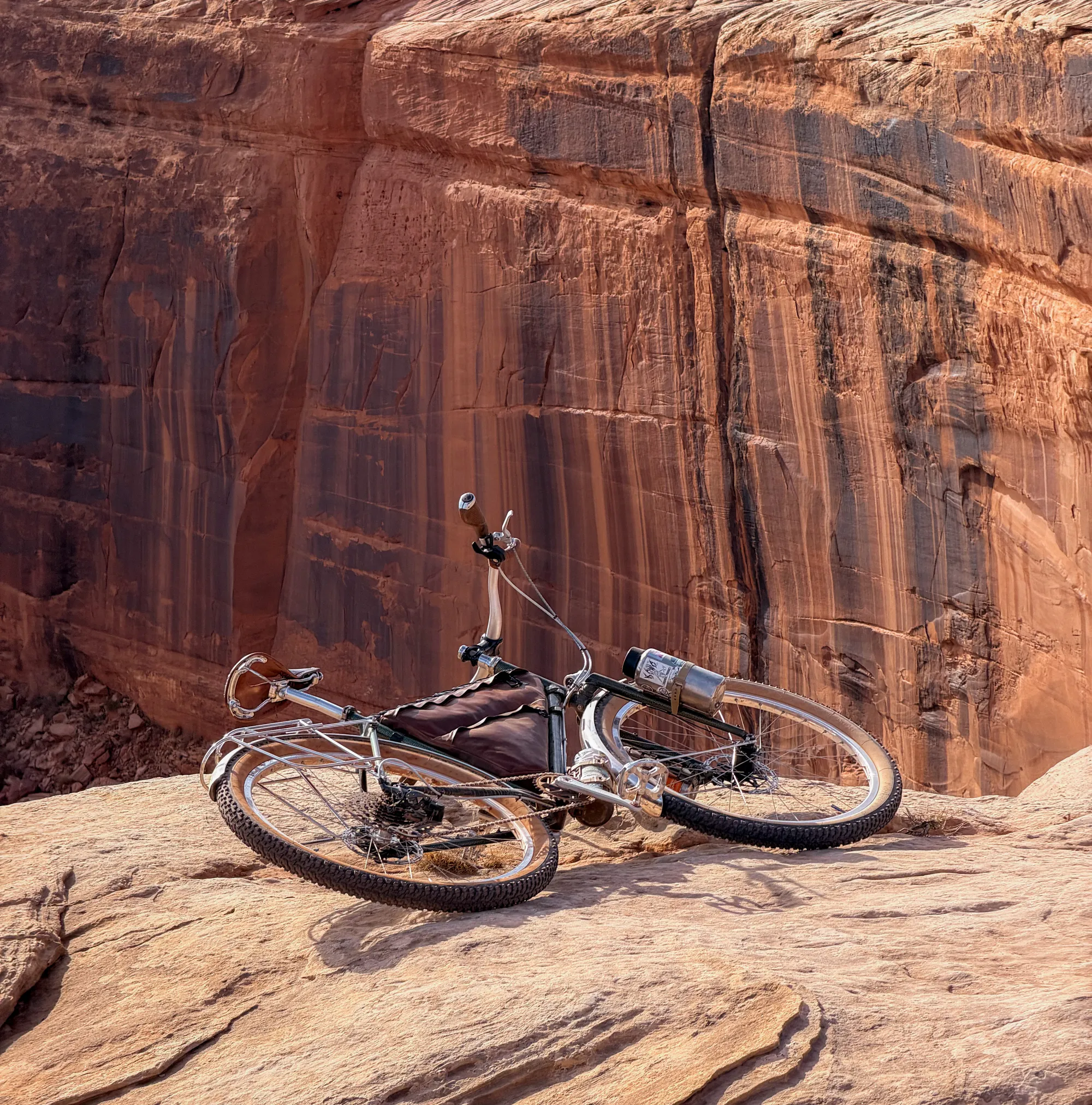
I recently took the bike down to Moab for the White Rim trail, a perfect test of what I built it for: all-day riding across rough, mixed terrain. It was an eerily warm day for the middle of December and never got below 50 degrees. The Piolet handled everything I threw at it, and looked right at home against the sandstone, the natural colors and curves blending into the desert rock.
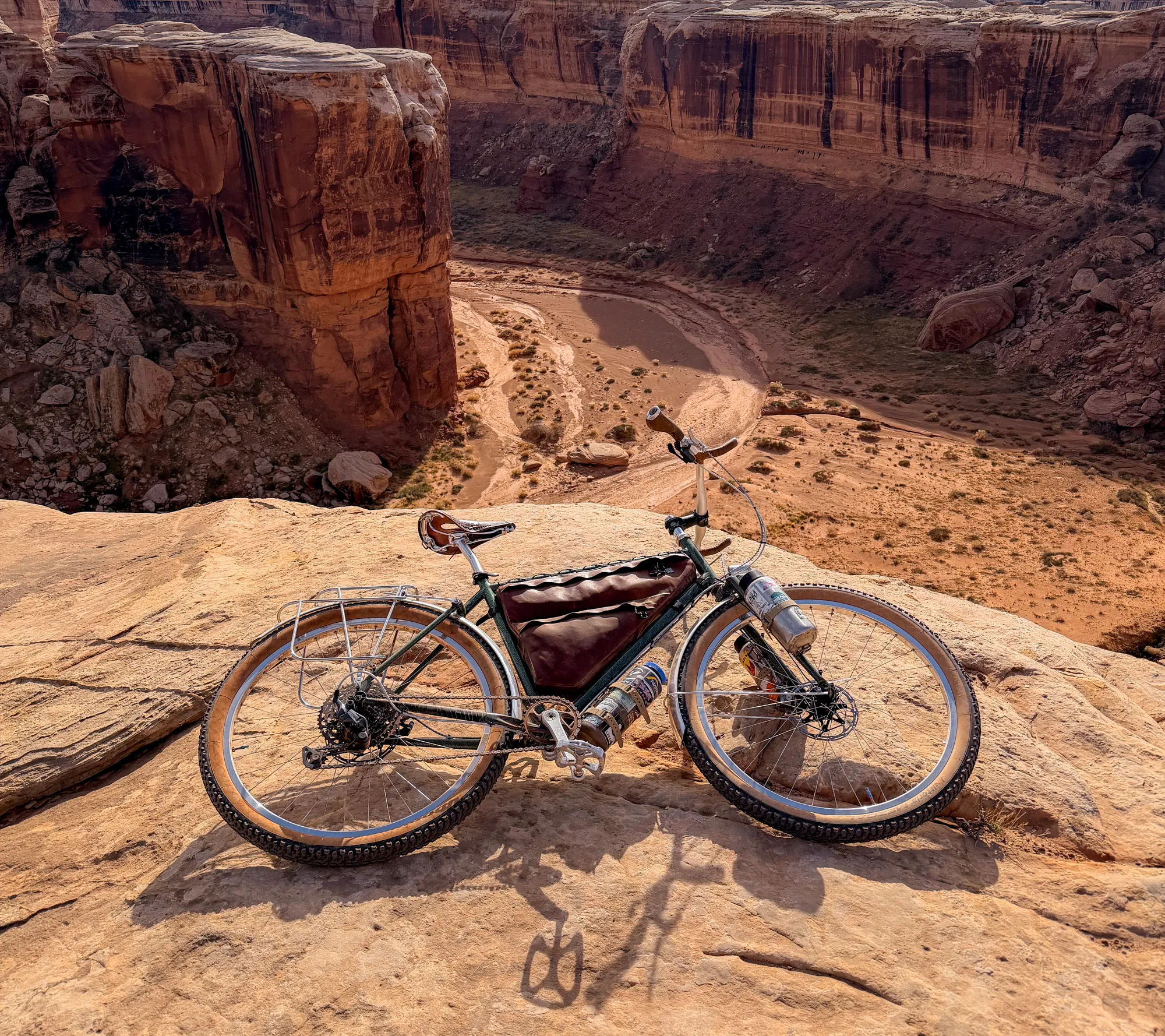
Riding over that landscape gave me the same feeling of exploration and independence that made me fall in love with biking in the first place. The bike rolled smoothly beneath me, letting me take in the miles of redrock passing by, and brought me back at the end of a long day ready for the next ride.
Build Kit
- Frame & Fork: Velo Orange Piolet, custom powder coated
- Rims: Velo Orange Voyager
- Hubs: Velo Orange Rear, Shimano Dynamo Front
- Tires: Vittoria Mezcal
- Handlebars: Velo Orange Crazy Bars
- Headset: Wolf Tooth
- Crankset: Paul Components
- Pedals: MKS Pretzel
- Cassette: Cues 11
- Derailleur: Cues 1x11
- Brakes: Growtac
- Brake Levers: Paul Short Pull
- Shifters: Cues 11
- Saddle: Brooks B17
- Seatpost: Thompson Elite Setback
- Stem: Thompson Elite
- Frame Bag: Kawa Designs Custom Leather
- Rear Bags: Kawa Designs Custom Waxed Canvas
- Accessory Bag: Kawa Designs Custom
- Rear Rack: Velo Orange Campeur
- Bottle Cages: Wolf Tooth
- Fenders: Tanaka with Velo Orange hardware
- Accessories: Spurcycle bell, Sinewave front dynamo light
Comments
No comments yet. Be the first!